
Classroom lesson Β· Wildlife Β· πŸ‡²πŸ‡± Mali

Dorcas Gazelle

A dainty desert sprinter of the Sahara

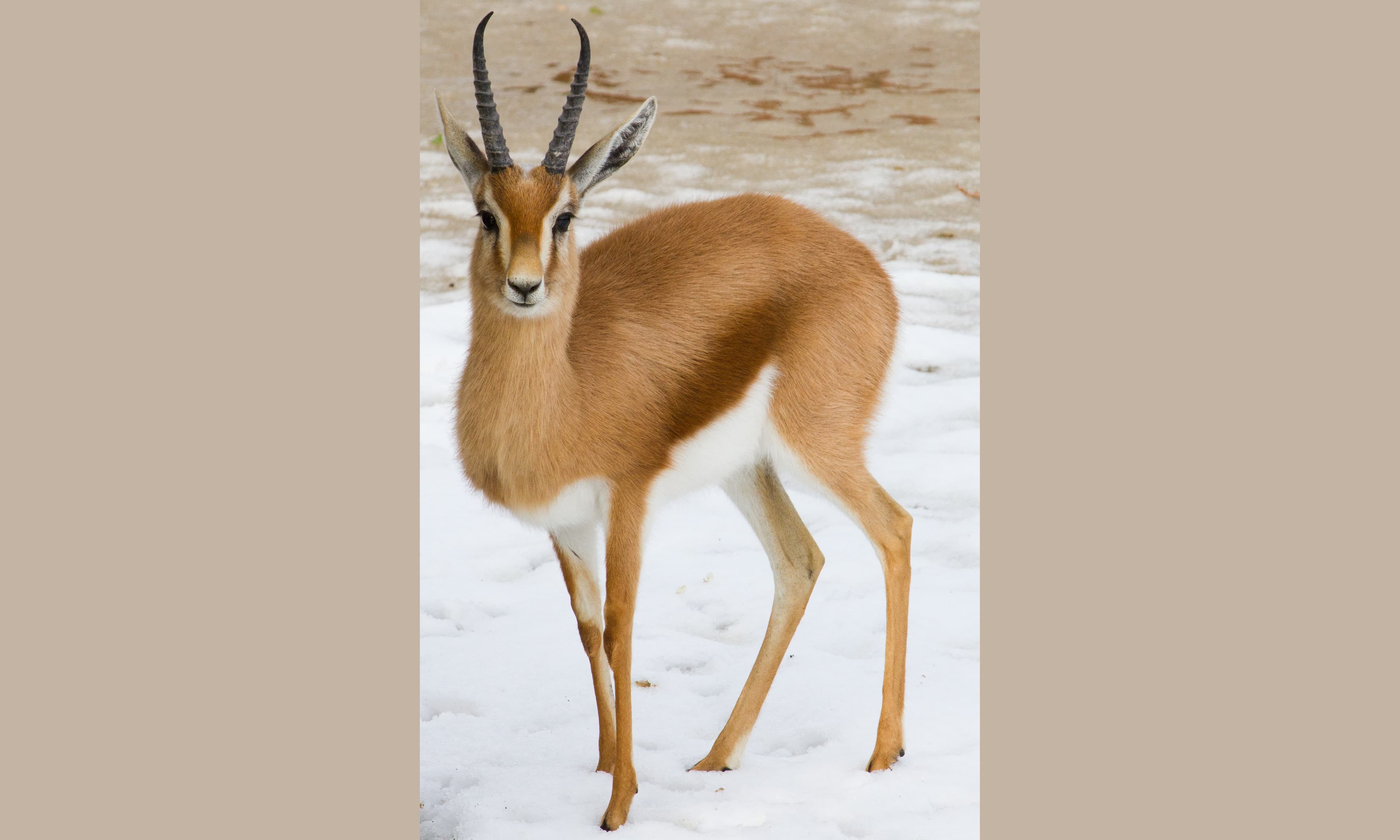
Photo Β· Wikimedia Commons

What is it?

The Dorcas gazelle is a small, graceful antelope that lives in the Sahara Desert and its edges. It is perfectly built for desert life: it can go for long periods without drinking water, getting moisture instead from the plants it eats. In Mali, these quick-footed gazelles pick their way across sandy plains and rocky plateaux, scanning the horizon with their large amber eyes.

Tell me more

A Dorcas gazelle stands only about 55–65 centimetres tall at the shoulder β€” roughly the height of a six-year-old child. But what it lacks in size it makes up for in speed: it can sprint at up to 80 kilometres per hour when it needs to escape a cheetah or eagle. Its long, slender legs are built for exactly that kind of explosive dash.

Dorcas gazelles have a clever trick for staying cool. Like a camel, they can let their body temperature rise during the hot day, storing the heat instead of sweating it away. Then at night, when the air cools, their body temperature drops back down. This means they use far less water than an animal that sweats all day.

In the Sahara, Dorcas gazelles eat a wide variety of dry shrubs, tough grasses and even acacia leaves β€” pulling the leaves off carefully to avoid the thorns. They live in small groups and are most active in the early morning and late afternoon when the temperature is lower. Their sandy-gold coats blend perfectly with the desert ground.

In the classroom

Walk your class through this in 15 minutes.

Talk together

Discussion prompts

  1. 01The Dorcas gazelle stays cool by storing heat instead of sweating. What other ways do you know of keeping cool without using water?
  2. 02Camouflage helps the gazelle hide. Can you think of other animals β€” or even objects β€” that use colour to blend in?
  3. 03This tiny gazelle can outrun a horse. Why might a small, light body be an advantage in the desert?
Try this

Classroom activity

Try a camouflage experiment. Cut small identical shapes from paper β€” some sandy-yellow, some bright red. Spread them on a sandy or beige background. Time how long it takes a partner to find all the red shapes, then all the yellow shapes. Discuss why colour matching matters so much for desert animals.