
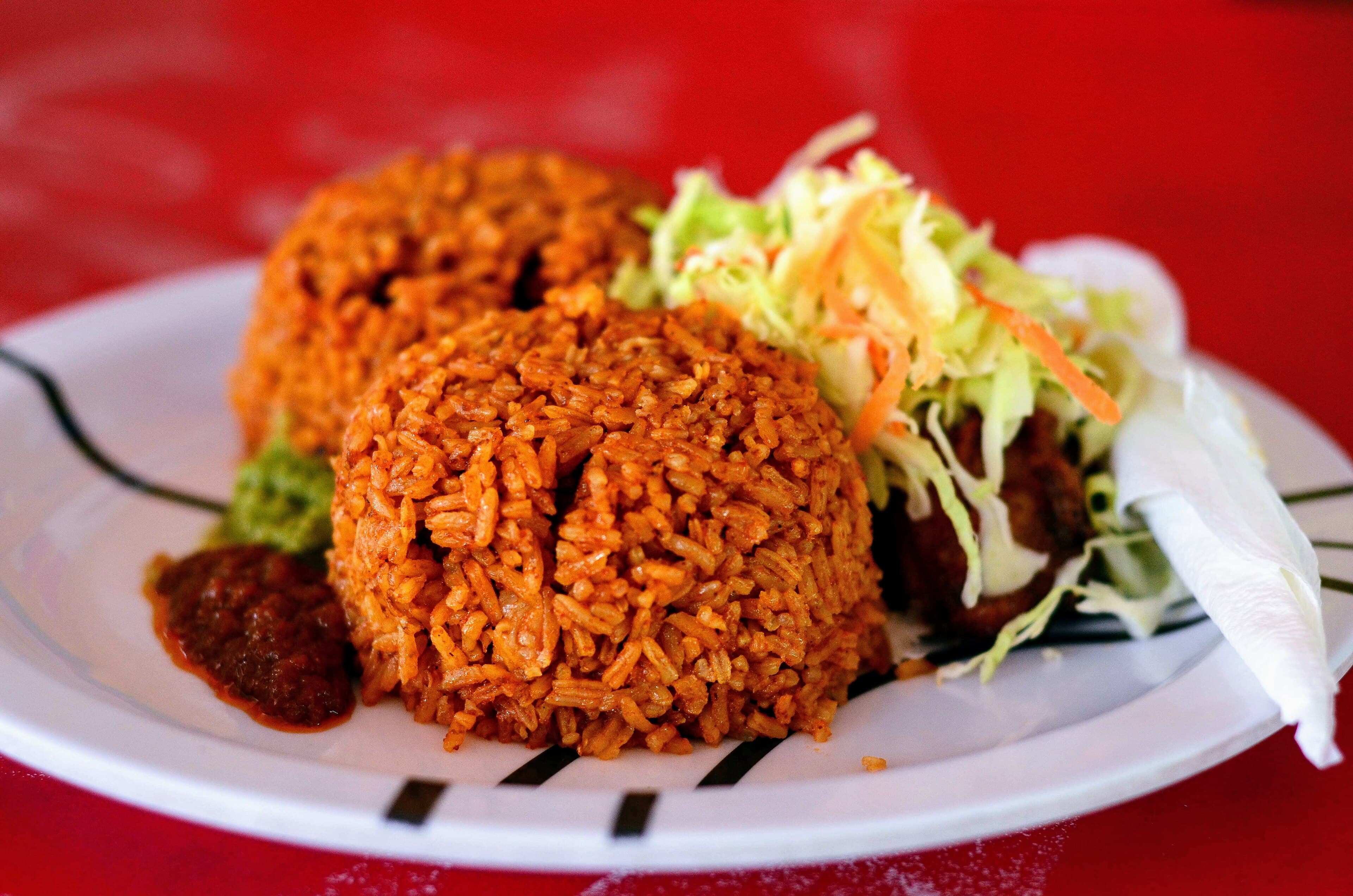
The word 'jollof' comes from the name of the Wolof people of Senegal and Gambia, where a very early version of the dish was made hundreds of years ago. Over the centuries, the recipe travelled with traders and travellers across West Africa and changed as it went - picking up local ingredients, spices and cooking techniques along the way.
Making jollof rice is a social occasion. In Mali, it is often cooked in enormous pots over an open fire for festivals, weddings and family gatherings, with neighbours and children gathered around, smelling the aromas and waiting eagerly. The cook - usually a skilled woman who has learned the recipe from her mother and grandmother - knows exactly when the rice is ready by sound and smell.
In Mali, rice is grown along the banks of the Niger River, especially in the Ségou and Mopti regions. The flooded fields during the rainy season are perfect for rice paddies. So when you eat Malian jollof rice, there is a good chance the rice itself was grown a few hundred metres from the river where hippos and fish eagles live.