
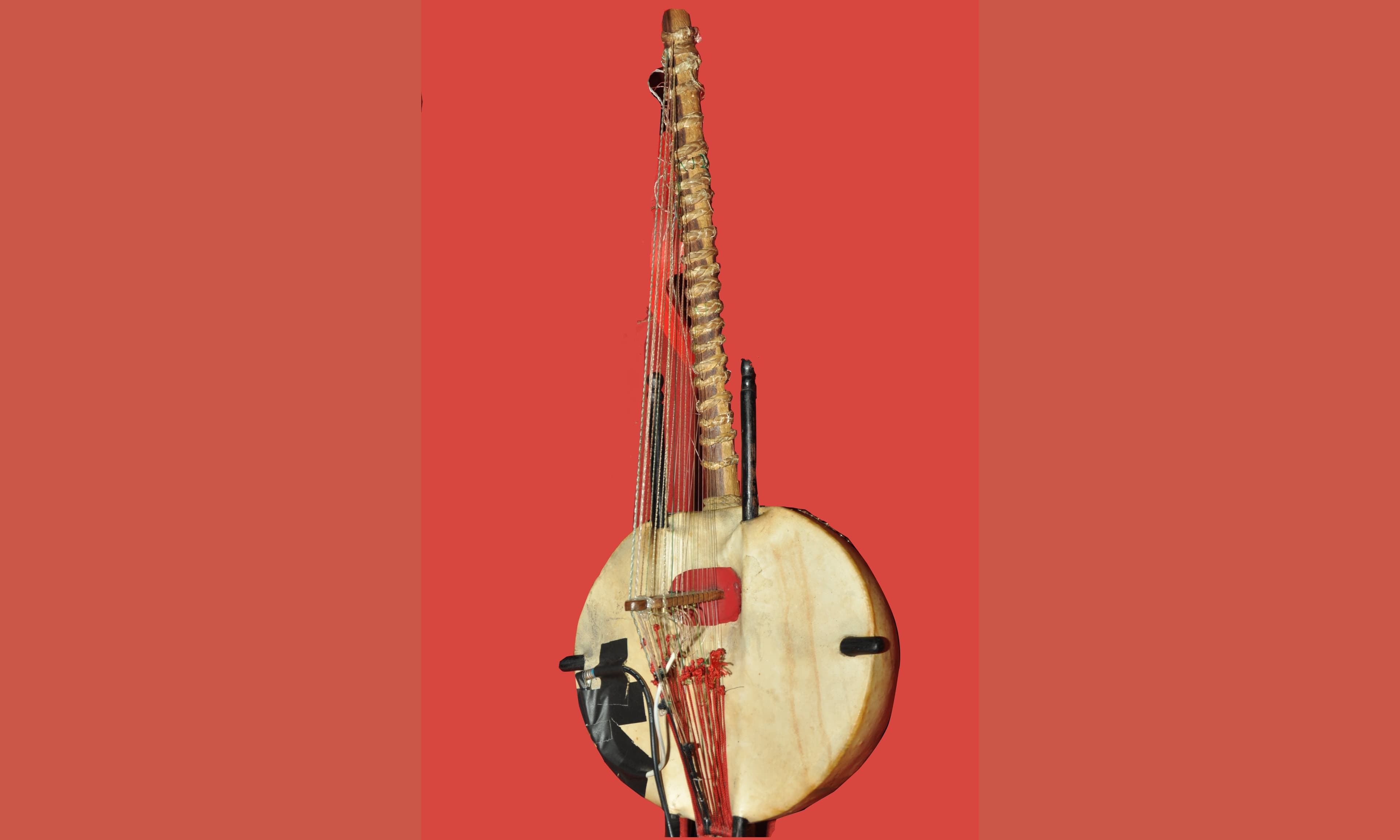
Making a kora takes great skill. A large gourd is dried, cut in half, covered with cow skin and fitted with a long wooden neck. Then 21 strings - originally leather, now fishing line or nylon - are attached in two parallel rows. The player holds the instrument upright, resting the gourd against their stomach, and plucks the strings with the thumbs and first two fingers of each hand.
Toumani Diabaté is Mali's most famous kora master and comes from a family that has played the kora for over 70 generations - that is more than 700 years of kora players in one family. He learned to play as a tiny child and went on to play with musicians from all over the world, bringing the sound of the Malian kora to concert halls in New York, London and Tokyo. He has never had a music lesson - everything was learned by listening and playing.
The kora is traditionally played by griots - special storytelling musicians in West African society who hold the history of communities in their songs. A griot's songs can tell the story of a family's ancestors, celebrate a hero or welcome an important guest. Because they memorise so many long stories, griots are sometimes called 'the living libraries' of West Africa.