
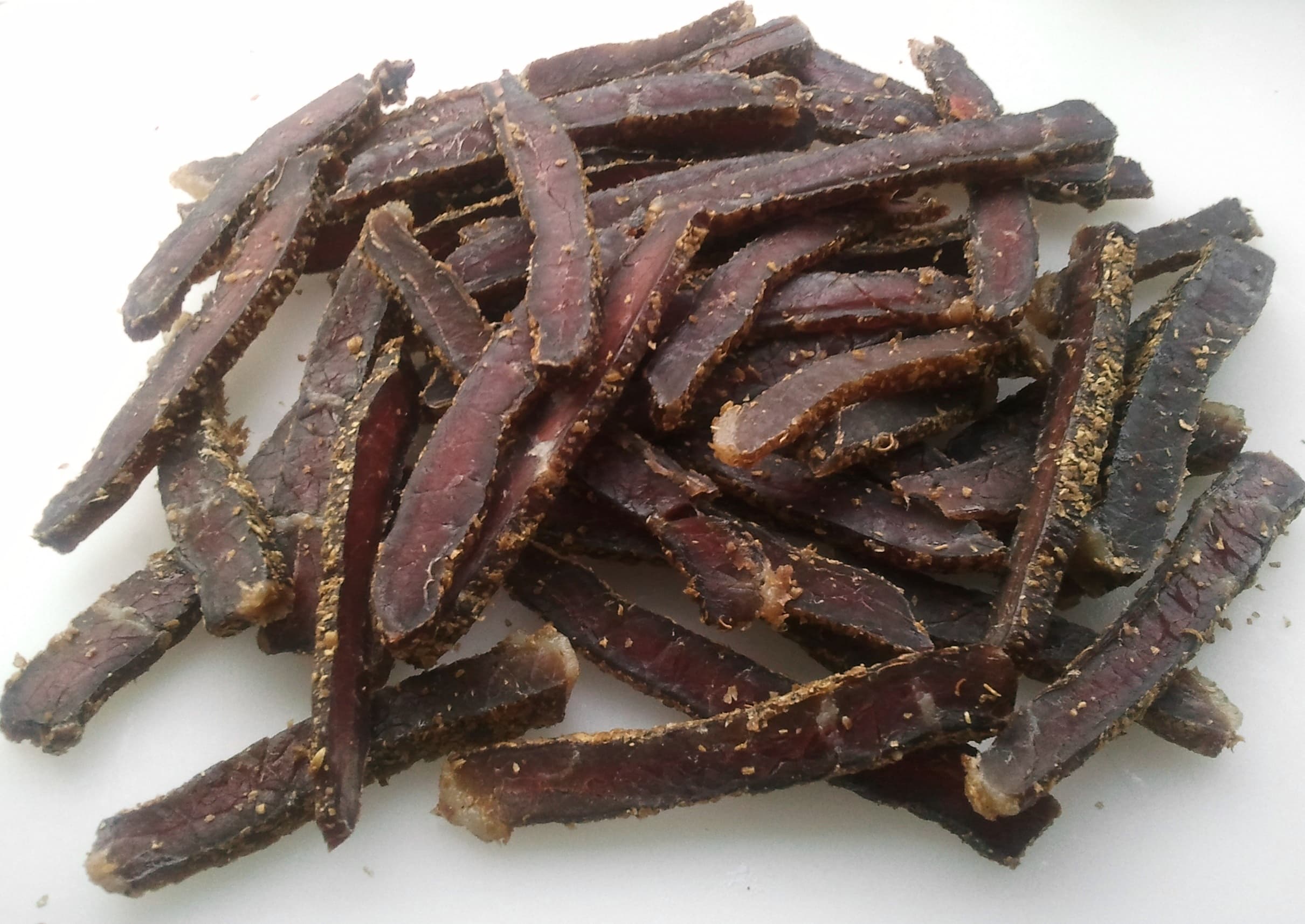
Biltong has been made in southern Africa for hundreds of years. Before fridges existed, drying meat in the sun and wind was one of the best ways to preserve it so it would not go off. The salt and vinegar help stop bacteria from growing, and the dry air removes the moisture that bacteria need to survive. It is ancient food science!
Almost any meat can be used for biltong, but in Namibia the most popular are beef and game meats like springbok, kudu and oryx. Each meat tastes slightly different - springbok biltong has a delicate, slightly sweet flavour while kudu is rich and deep. Hunters have always made biltong from their catch as a way of preserving and enjoying meat throughout the year.
Making biltong is a skill that families pass down through generations. The exact blend of spices is often a closely guarded family secret. Some people like it very dry and hard (called 'droog' in Afrikaans), while others prefer it moist and tender in the middle. Debates about the 'perfect' biltong are taken very seriously in Namibia!
Today biltong is sold in supermarkets and specialist shops all over the world, but Namibian biltong - especially game biltong - is considered among the finest. It is packed with protein, low in fat, and keeps for weeks, making it a practical and delicious snack for hikers, travellers and anyone who wants a taste of Namibia.