
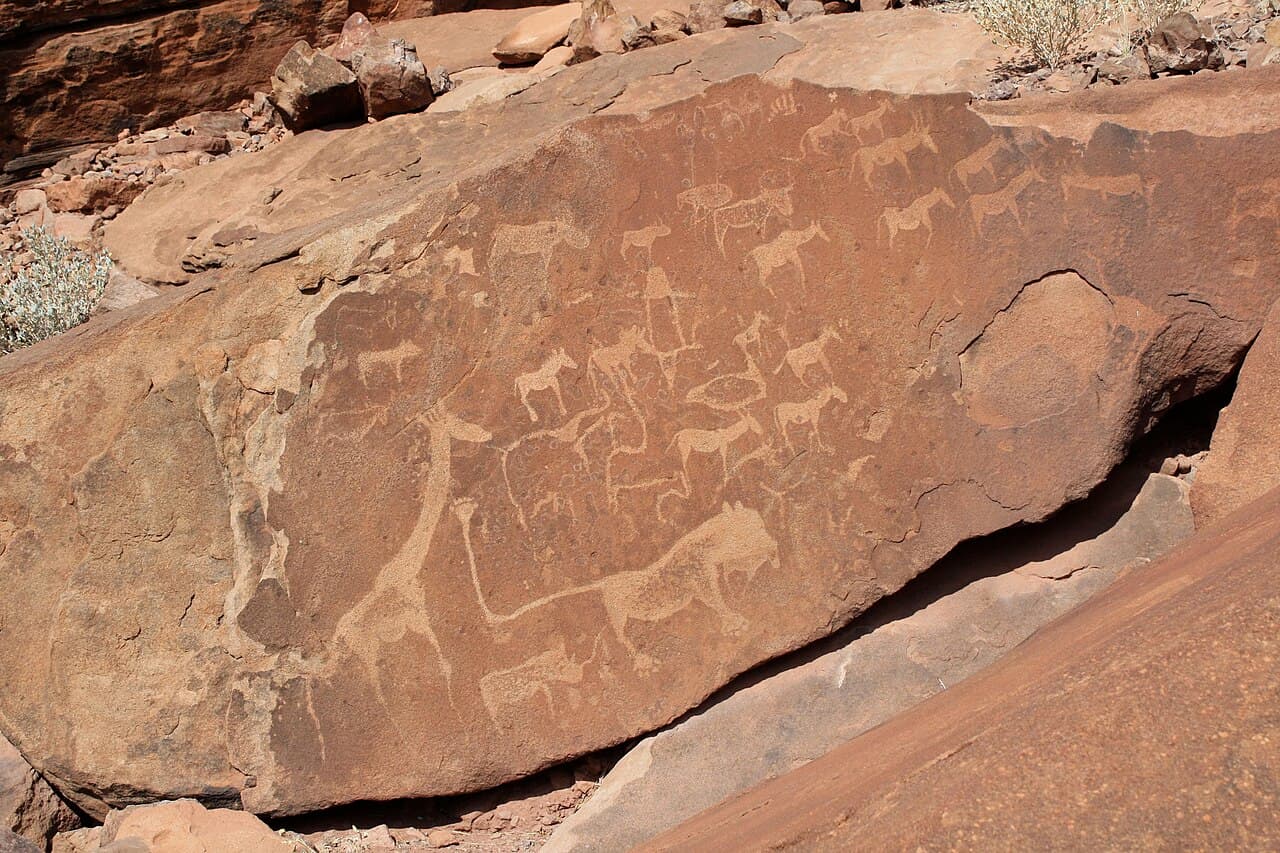
The San people are one of the oldest groups of people on Earth, and they have been living in southern Africa for at least 100,000 years. They are skilled hunters and gatherers who know the desert landscape in extraordinary detail. Their rock art was not just decoration - it was a way of recording important stories, sharing knowledge, and connecting with the spiritual world.
The most famous rock art site in Namibia is called Twyfelfontein, which means 'Doubtful Spring' in Afrikaans. There are more than 2,000 individual rock engravings (images carved into the rock surface) at this one site. In 2007 it became Namibia's first UNESCO World Heritage Site. The engravings include lions with paw prints, seals, penguins, rhinos and many other animals.
The artists used hard stone tools to chip away at softer rock, revealing a lighter layer underneath. Some images are incredibly detailed - you can see the patterns on a giraffe's skin or the spots on a leopard. Others are more symbolic, showing dancing figures or patterns that may have had special spiritual meaning.
San people today still carry the knowledge of how to read and interpret this ancient art. They are the living link between those ancient artists and our world today. Learning about rock art is a way of listening to people who lived thousands of years ago - a form of time travel through pictures.