
Classroom lesson ยท Sossusvlei Red Dunes ยท ๐Ÿ‡ณ๐Ÿ‡ฆ Namibia

Sossusvlei Red Dunes

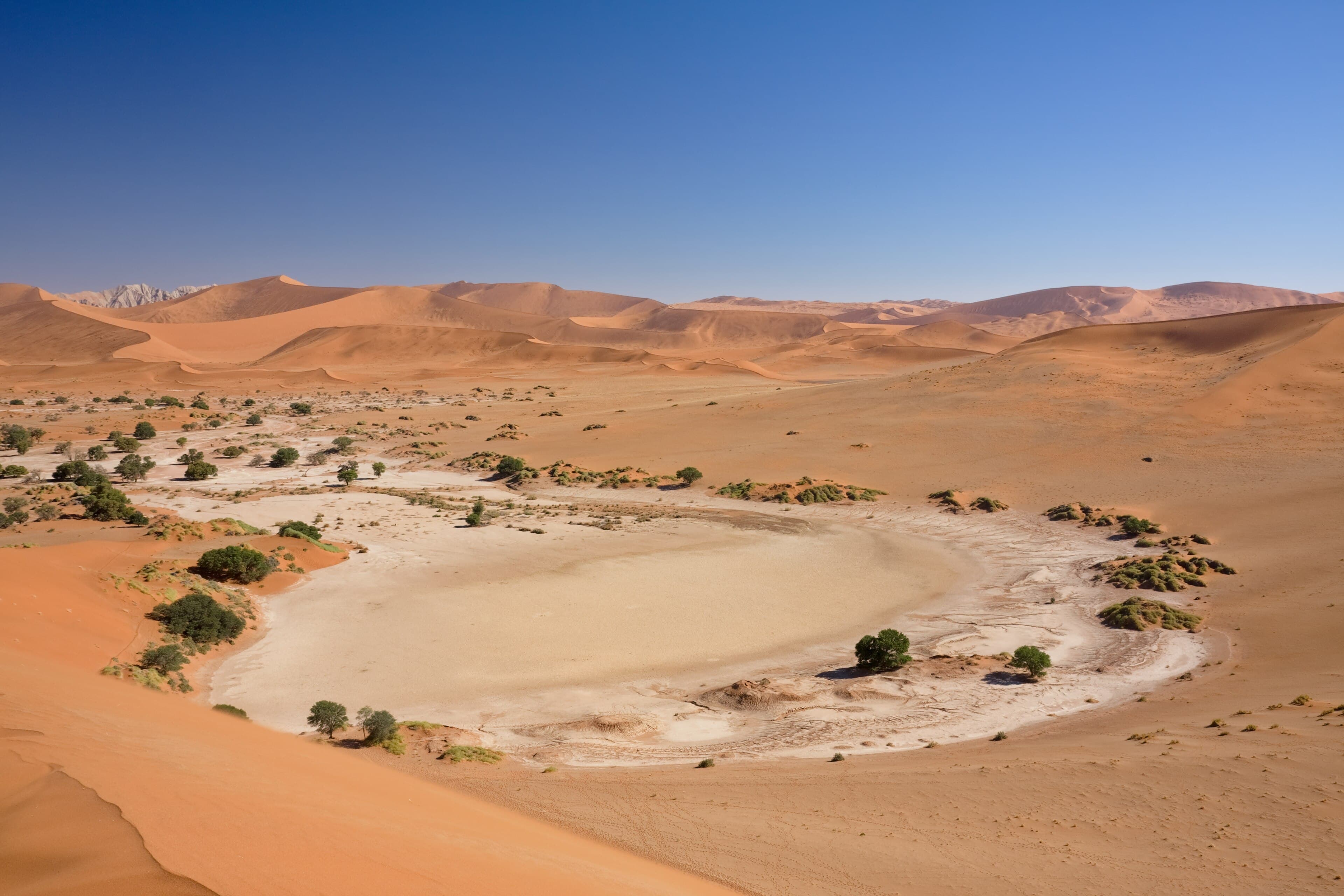
Some of the tallest sand dunes on Earth, glowing orange and red

Photo ยท Wikimedia Commons

What is it?

Sossusvlei is a place in the Namib Desert where enormous sand dunes rise as high as 325 metres โ€” that is taller than the Eiffel Tower! The sand is red and orange because it contains iron that has turned rusty over millions of years. It is one of the most spectacular desert landscapes anywhere on Earth.

Tell me more

The Namib Desert is one of the oldest deserts in the world โ€” it has been dry for at least 55 million years. The dunes at Sossusvlei are shaped by the wind, which blows sand from the Atlantic Ocean coast inland and slowly piles it up into giant ridges. Because the wind always comes from the same direction, the dunes have a steep sharp side and a gentle sloping side.

The colours change throughout the day, which makes Sossusvlei magical to visit. At sunrise the dunes glow deep red and pink. By midday they turn a bright orange. As the sun sets, they shift to purple and violet. Photographers and painters come from all over the world just to capture these colours.

In the middle of Sossusvlei there is a flat, pale clay pan called Deadvlei. Long ago it had a small lake and trees grew there. The lake dried up but the old dead trees are still standing, their dark twisted shapes making a striking contrast against the white pan and the orange dunes all around them.

Surprisingly, animals do live here. Beetles collect tiny drops of morning fog on their backs and tilt their bodies to roll the water into their mouths. Sidewinder snakes move in a special looping pattern to keep as little body as possible touching the burning sand. Life in the desert is full of clever tricks.

In the classroom

Walk your class through this in 15 minutes.

Talk together

Discussion prompts

  1. 01Why do you think the dunes look different colours at different times of day? What does light do to colours?
  2. 02The beetles collect water from fog โ€” can you think of another clever way an animal or plant might survive in a very dry place?
  3. 03If you could visit Sossusvlei at any time of day to see the best colours, which time would you choose and why?
  4. 04The trees in Deadvlei have been standing for 900 years without rotting. What do you think stops them from decomposing?
Try this

Classroom activity

Create a triptych painting of the same dune at sunrise, midday, and sunset. Use warm reds and pinks for sunrise, bright oranges for midday, and purples and violets for sunset. Label each panel with the time of day and the colours you mixed.