
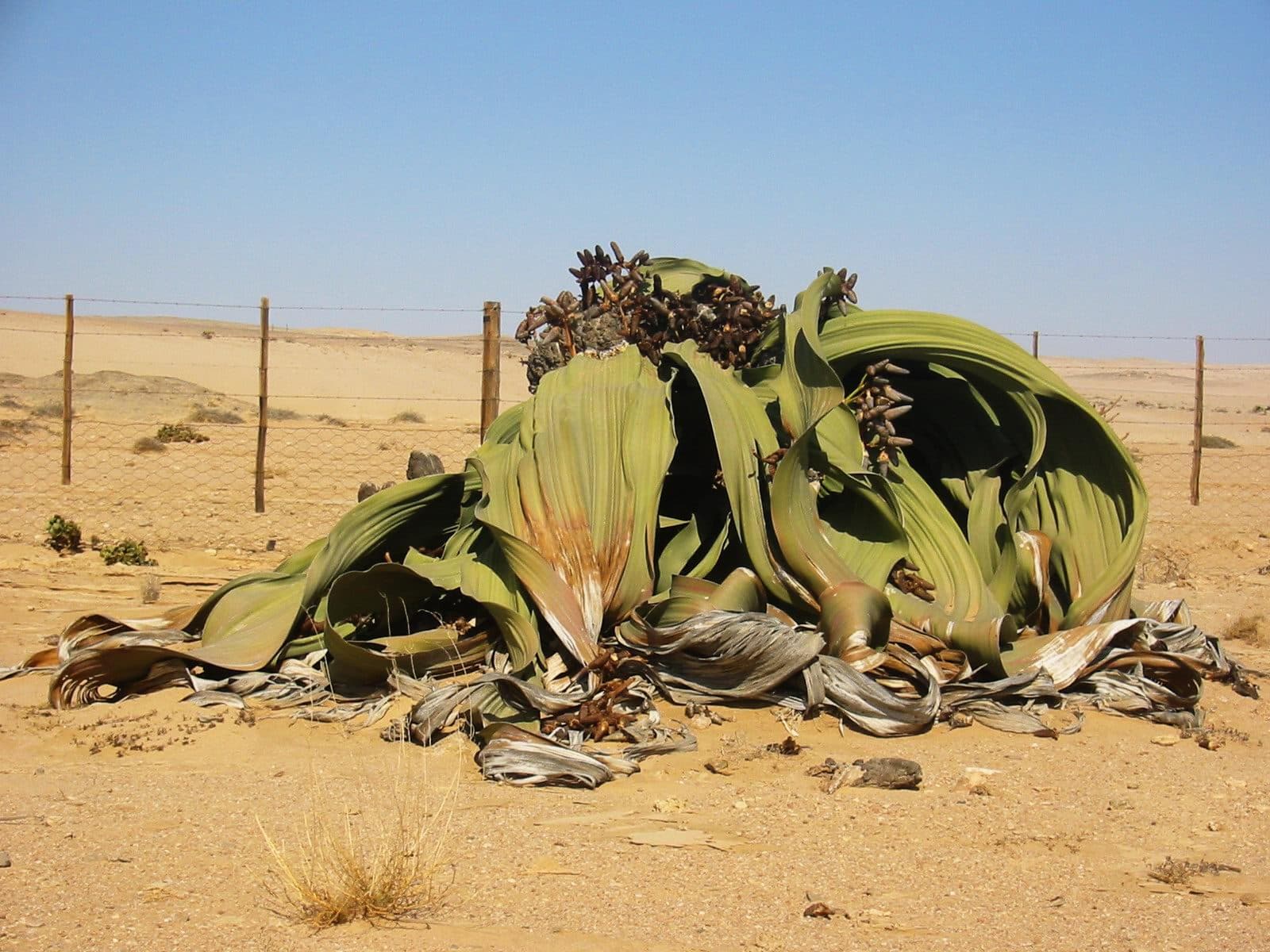
The Welwitschia looks like a mess of shredded leaves spread across the ground, but those long ribbons are actually just two leaves that have been growing and splitting for hundreds of years. Over time wind, heat and time tear the leaves into strips, so an old plant can look like it has dozens of leaves when really there are only two, growing from a short woody stem in the middle.
The plant collects water through its leaves by absorbing the coastal fog that rolls in from the Atlantic Ocean. This is its main source of water, because rain in the Namib can be very rare. The leaves are specially designed with many tiny pores that catch fog droplets, making the Welwitschia perfectly adapted to one of the driest places on Earth.
Scientists have measured some Welwitschia plants and estimated them to be around 1,500 years old using a technique called carbon dating. That means some plants alive today were already growing when the Vikings were sailing across the Atlantic Ocean. It is one of the longest-living organisms on the planet.
The Welwitschia is so special and unique that it has its own scientific family all by itself - there is nothing else quite like it anywhere in the plant kingdom. It is Namibia's national plant and appears on the country's coat of arms. Namibians are very proud of this extraordinary living fossil.