
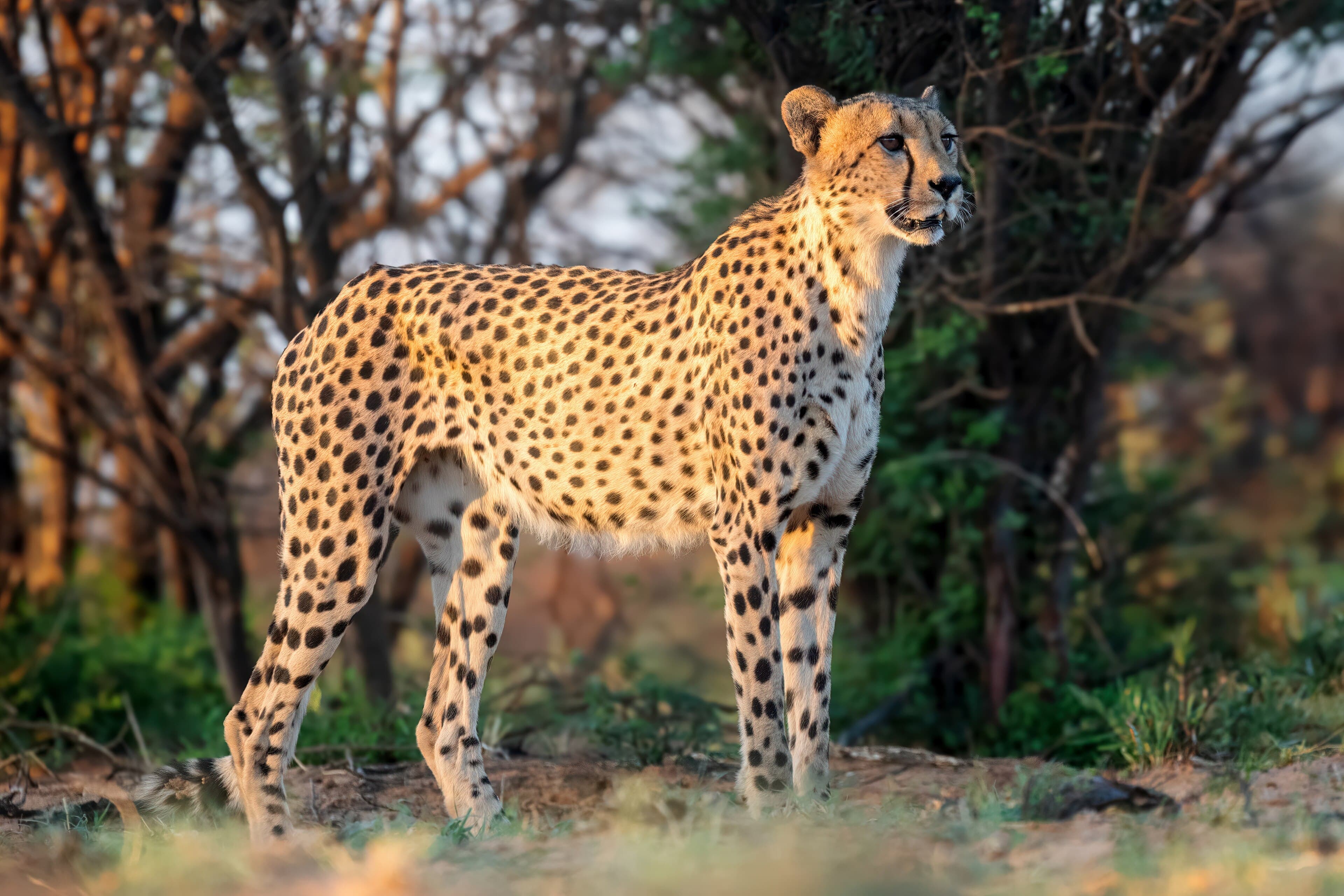
A cheetah's body is an engineering masterpiece designed for speed. Its spine is extremely flexible and works like a spring, coiling and uncoiling with every stride to lengthen its step. Its claws are semi-retractable (they stay partially out all the time, like running spikes on shoes) for grip. Large nostrils and lungs take in huge amounts of air during a sprint, and its long tail acts as a rudder for steering at high speed.
A cheetah can accelerate from 0 to 100 kilometres per hour in about three seconds - faster than most sports cars. But sprinting at top speed uses so much energy that a chase can only last 20-30 seconds before the cheetah has to rest and cool down. Despite being so fast, cheetahs are actually quite gentle compared to other big cats - they are unable to roar and make a sound more like a purr or a chirp.
Namibia is unusual because most of its cheetahs live not in national parks but on private farmlands. This means that farmers and cheetahs need to find a way to coexist. The Cheetah Conservation Fund, based in Namibia, has been helping farmers and cheetahs live side by side for decades, and is one of the most important cheetah conservation organisations in the world.
Female cheetahs are usually solitary, living and hunting alone. Males sometimes form small groups called coalitions, often made up of brothers who stay together after leaving their mother. Cheetah cubs - there are usually three to five in a litter - are born with a long grey mane on their backs that helps camouflage them in tall grass when they are small.