
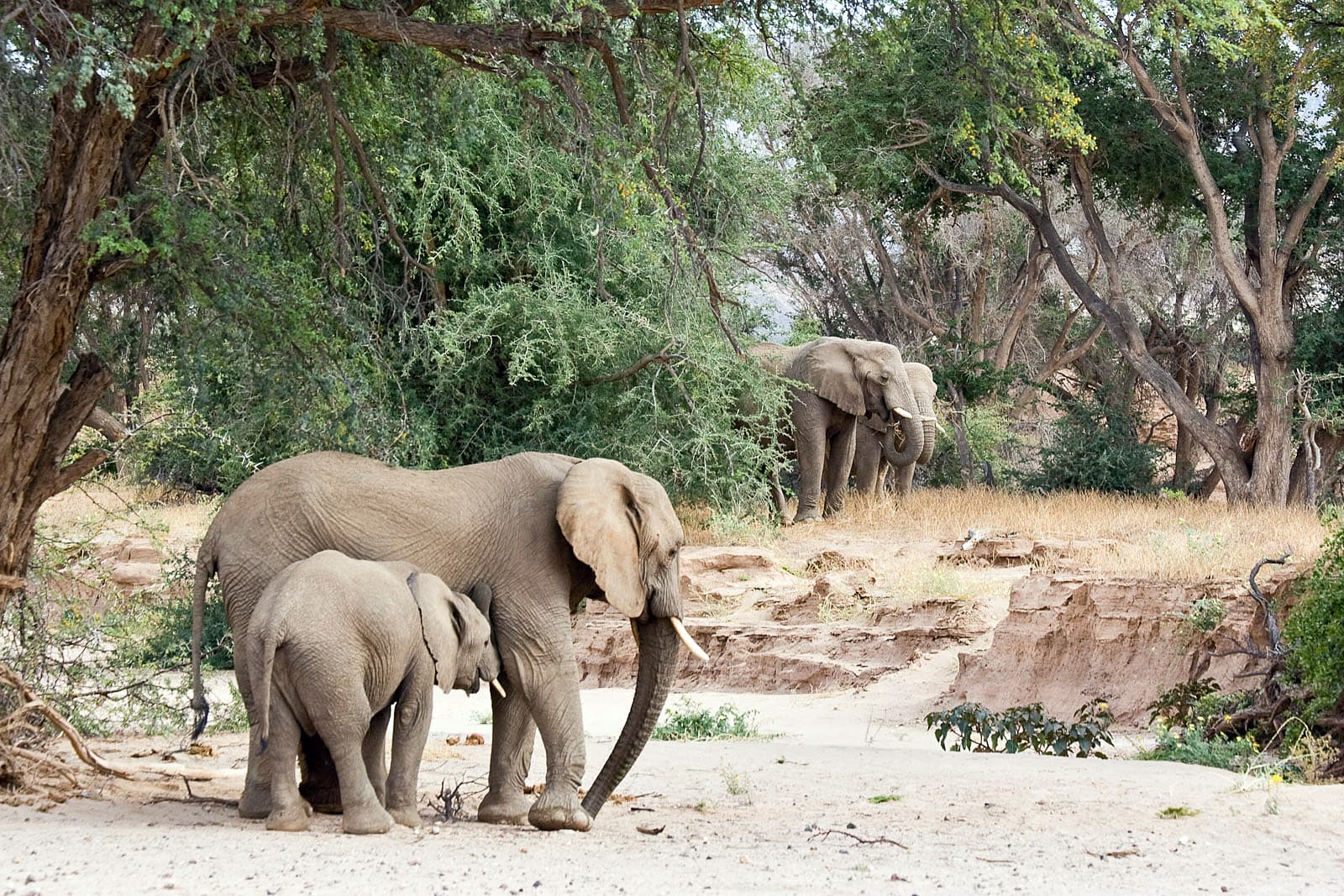
Desert elephants look very similar to savanna elephants but have a few differences from living in dry, rocky terrain. Their feet are broader relative to their body weight, which helps them walk on soft sand without sinking. Their legs are slightly longer, and they tend to be leaner than savanna elephants because food is harder to find. Over many generations the elephants that were best suited to desert life survived and passed on their traits.
These elephants have an extraordinary ability to find water. They can smell water from kilometres away and can dig with their trunks and feet in dry riverbeds to find water hidden underground. The holes they dig are used by many other animals too - other elephants, zebras, and even small birds wait patiently to drink from the wells the elephants create.
Desert elephant herds are led by the oldest female, called the matriarch. She carries in her memory a mental map of every waterhole, salt lick and food source across a territory that can cover thousands of square kilometres. When a drought comes, it is the matriarch's memory that saves the herd by leading them to water sources others have forgotten.
Watching a desert elephant family cross a sea of red sand dunes is one of the most magical wildlife experiences in Namibia. Community conservancies have helped the population recover from very low numbers in the past, and today there are around 600 desert-adapted elephants in Namibia - a wonderful conservation success story.