
Classroom lesson · Wildlife · 🇳🇦 Namibia

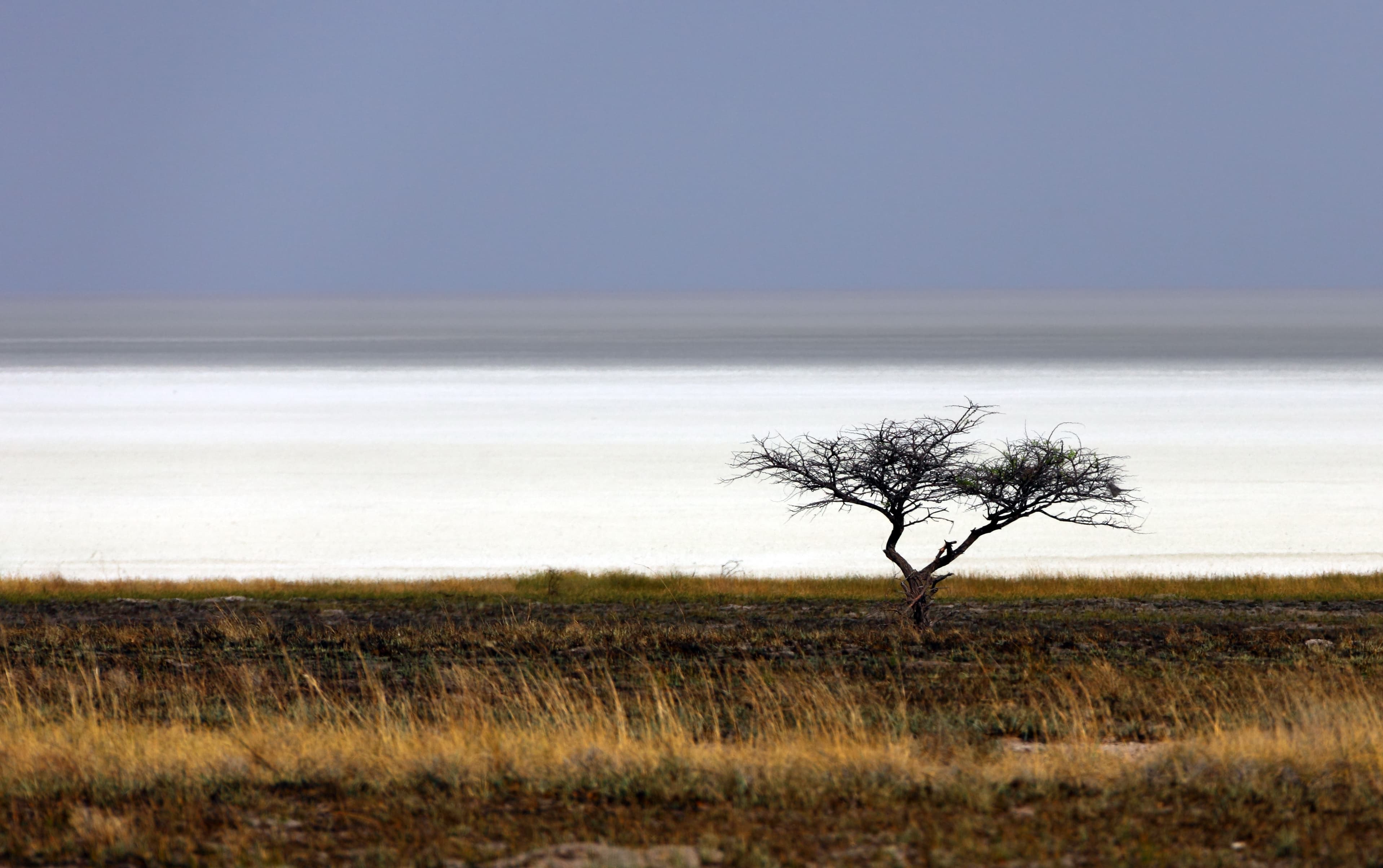
Etosha Salt Pan

A vast shimmering white pan that becomes a wildlife paradise

Photo · Wikimedia Commons

What is it?

The Etosha Salt Pan is a giant flat area of white salt in northern Namibia, so large it can be seen from space. It is about 130 kilometres long and covers roughly 5,000 square kilometres — bigger than the whole country of Trinidad and Tobago. The pan is the heart of Etosha National Park, one of Africa's greatest wildlife reserves.

Tell me more

Long ago, Etosha was a shallow lake. Over thousands of years the climate became drier and the lake dried up, leaving behind all the salt and minerals that had been dissolved in the water. Today the pan is completely flat and white, like a giant mirror when it catches the light. In the local Ndonga language, 'Etosha' means 'great white place'.

After heavy rains, a thin layer of water sometimes covers the pan and thousands of flamingos fly in to feed. The flamingos eat tiny shrimps and algae that bloom in the salty water, and their legs turn the pan into a mass of pink. Seeing tens of thousands of flamingos from above looks like someone has painted the pan pink.

Around the edges of the pan are waterholes where animals come to drink. Because the pan itself has no fresh water, these waterholes are incredibly busy — elephants, lions, giraffes, zebras and rhinos all visit the same spots. Some of the waterholes are lit at night so visitors can watch animals drinking under the stars.

Etosha National Park protects more than 100 different species of mammal, including the largest population of black rhinos anywhere in the world. The park was one of the first places in Africa to be set aside for wildlife protection, and the animals there have grown comfortable enough that they come very close to visitor vehicles.

In the classroom

Walk your class through this in 15 minutes.

Talk together

Discussion prompts

  1. 01The pan was once a lake. What clues might a scientist look for to find out what the area was like thousands of years ago?
  2. 02Lions, zebras, elephants and rhinos all share the same waterhole. How do you think they manage to do that safely?
  3. 03Why do you think flamingos are pink? Can you find out what in their food gives them that colour?
  4. 04What does 'great white place' make you picture in your mind? How would you describe Etosha to someone who has never seen it?
Try this

Classroom activity

Design a 'waterhole scene' collage. Cut or draw at least five different animals that might visit an Etosha waterhole. Arrange them around a central blue oval of water and add labels. Then think: which animals are predators and which are prey? Use different coloured borders to show which is which.