
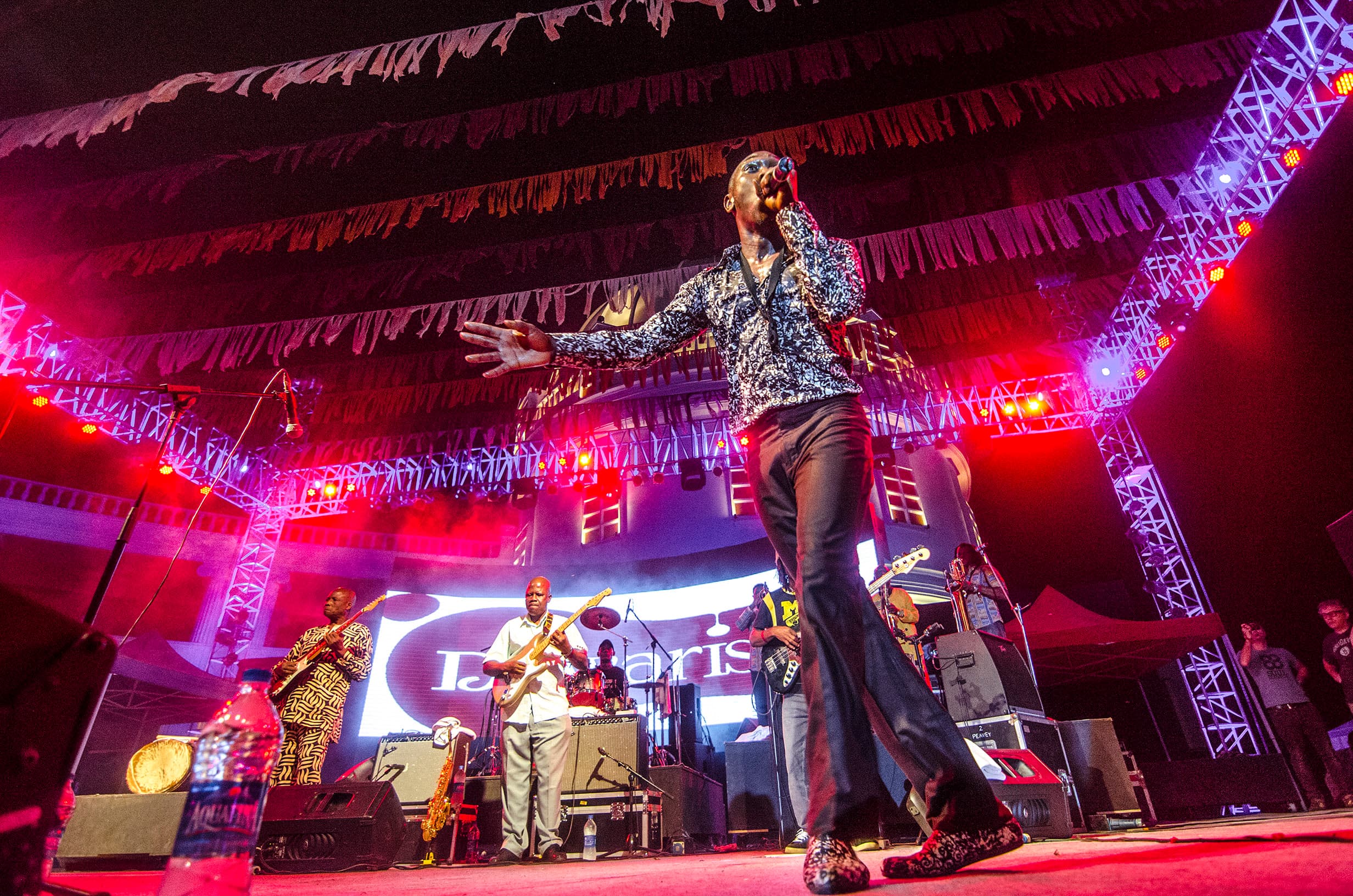
Music in Namibia is never just for listening - it is for doing. At community gatherings, weddings, festivals and celebrations, music and dance are the heartbeat of the event. The Damara people are famous for their hambo songs - a style of singing in tight harmonies that sounds extraordinary, with voices weaving in and out of each other. The Himba people perform polyphonic (many-voiced) songs around the sacred fire at the heart of their villages.
Ndombolo music has a fast, infectious beat with lots of bass and percussion. The dancing that goes with it is very energetic and involves fast footwork, hip movements and partner interactions. It originated in the Democratic Republic of Congo but spread rapidly across Africa and is now extremely popular in Namibia, especially at parties and youth events.
Traditional Namibian instruments include the !gora, a musical bow played by the Khoikhoi people, and various types of drums made from animal hide stretched over hollow wooden cylinders. The San use thumb pianos (called mbira or kalimba) and musical bows. These instruments have simple designs but can produce rich, complex music when played by skilled musicians.
Music education is important in Namibian schools, and many children learn to play instruments and sing in choirs from a young age. The Namibian Choral Festival brings together school choirs from across the country to celebrate singing. Hearing hundreds of children singing in harmony - in Oshiwambo, Otjiherero, Nama, Afrikaans and English - is a powerful celebration of Namibia's diversity.