
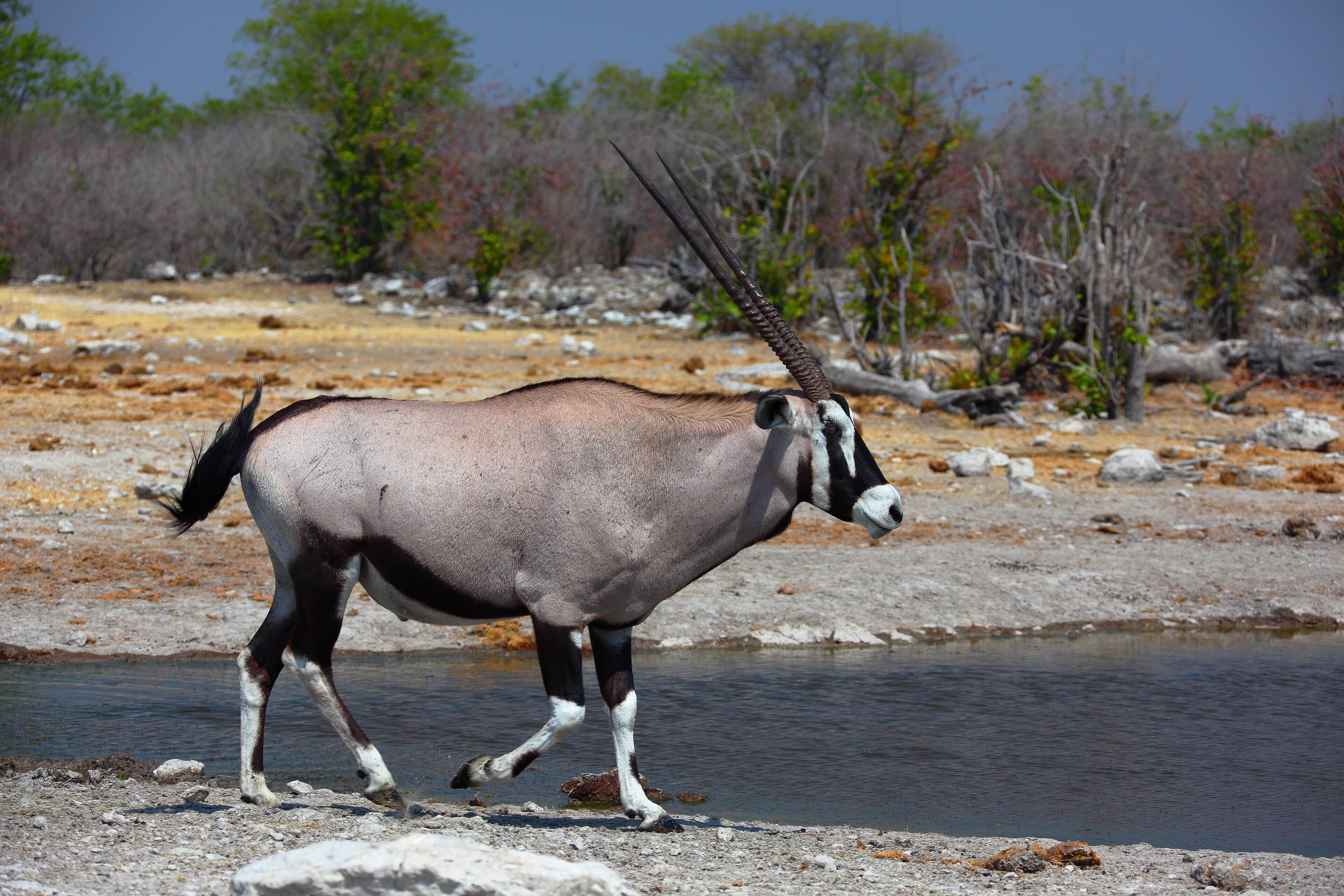
The oryx is famous for being able to survive in places where most animals would quickly overheat and die. Its body has a remarkable cooling system - blood flowing to the brain passes through a network of tiny vessels near the nose where it is cooled by the air the oryx breathes in. This keeps the brain at a safe temperature even when the rest of the body is very hot.
Oryx can survive for days without drinking water by getting moisture from the plants they eat, including wild melons and desert grasses. When water is available, they drink large amounts and can tolerate their body temperature rising to 45°C - a temperature that would be dangerous for humans - during the hottest part of the day, then cooling down again at night.
Both male and female oryx have horns, which they use to defend themselves against predators such as lions and hyenas. Their horns are so long and sharp that an oryx can seriously injure a lion, and predators are often very cautious around them. It is thought that sightings of the oryx in profile (from the side) - where its two horns can look like one - may have inspired the legend of the unicorn.
The oryx appears on Namibia's national coat of arms, standing proudly alongside the Welwitschia plant. The Namibian people chose the oryx because it represents strength, endurance and the ability to thrive even in the most challenging conditions.