
Classroom lesson Ā· Music Ā· šŸ‡°šŸ‡µ North Korea

Gayageum

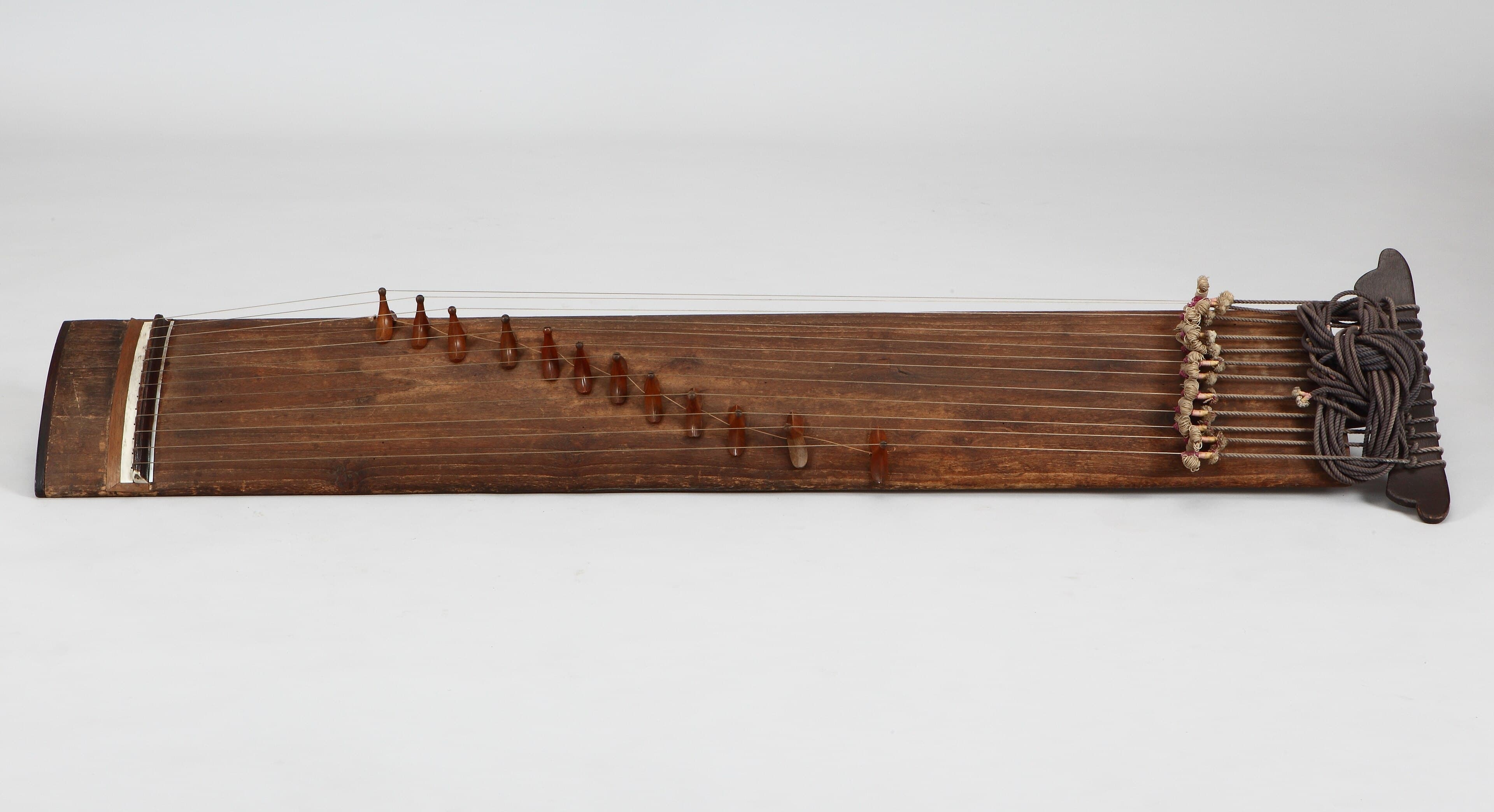
Korea's beloved 12-string zither, played for over 1,500 years

Photo Ā· Wikimedia Commons

What is it?

The gayageum is a traditional Korean string instrument with 12 silk strings stretched over a long, curved wooden body. The player sits on the floor, rests the instrument across their knees, and plucks the strings with one hand while pressing or bending them with the other to change the pitch. It has been at the heart of Korean music for more than 1,500 years.

Tell me more

The gayageum body is carved from paulownia wood, which is lightweight but resonant — meaning it sends the sound singing out clearly. Each of the 12 strings rests on its own moveable bridge, which the player adjusts to tune the instrument before playing. The sound is warm, delicate and slightly twangy.

A skilled gayageum player can produce beautiful vibrato — a gentle wavering in the pitch — by rocking a finger on the string after plucking it. They can also slide between notes, which gives Korean traditional music its characteristic flowing, expressive sound.

The gayageum appears in two main sizes. The 'jeong-ak' version is larger and plays slow, stately court music. The 'sanjo' version is slightly smaller and used for lively, improvisational folk music that builds in speed and excitement as the piece goes on.

Today the gayageum is taught in music schools across the Korean peninsula and is played in orchestras, small ensembles and solo performances. Modern composers write new music for it, blending its traditional sound with jazz, pop and contemporary styles.

In the classroom

Walk your class through this in 15 minutes.

Talk together

Discussion prompts

  1. 01The gayageum has been played for 1,500 years. What instruments from your country are very old? Do people still play them today?
  2. 02The player sits on the floor to play the gayageum. How might sitting on the floor change the way you feel when you make music?
  3. 03Modern musicians mix the gayageum with jazz and pop. Can you think of other times when a very old tradition mixes with something modern? Does that feel exciting or strange?
Try this

Classroom activity

Make a simple string instrument. Stretch elastic bands of different thicknesses across an open shoebox. Pluck each band — notice how thicker or looser bands make lower sounds. Draw your instrument and label which strings would make high and low notes, like the gayageum.