
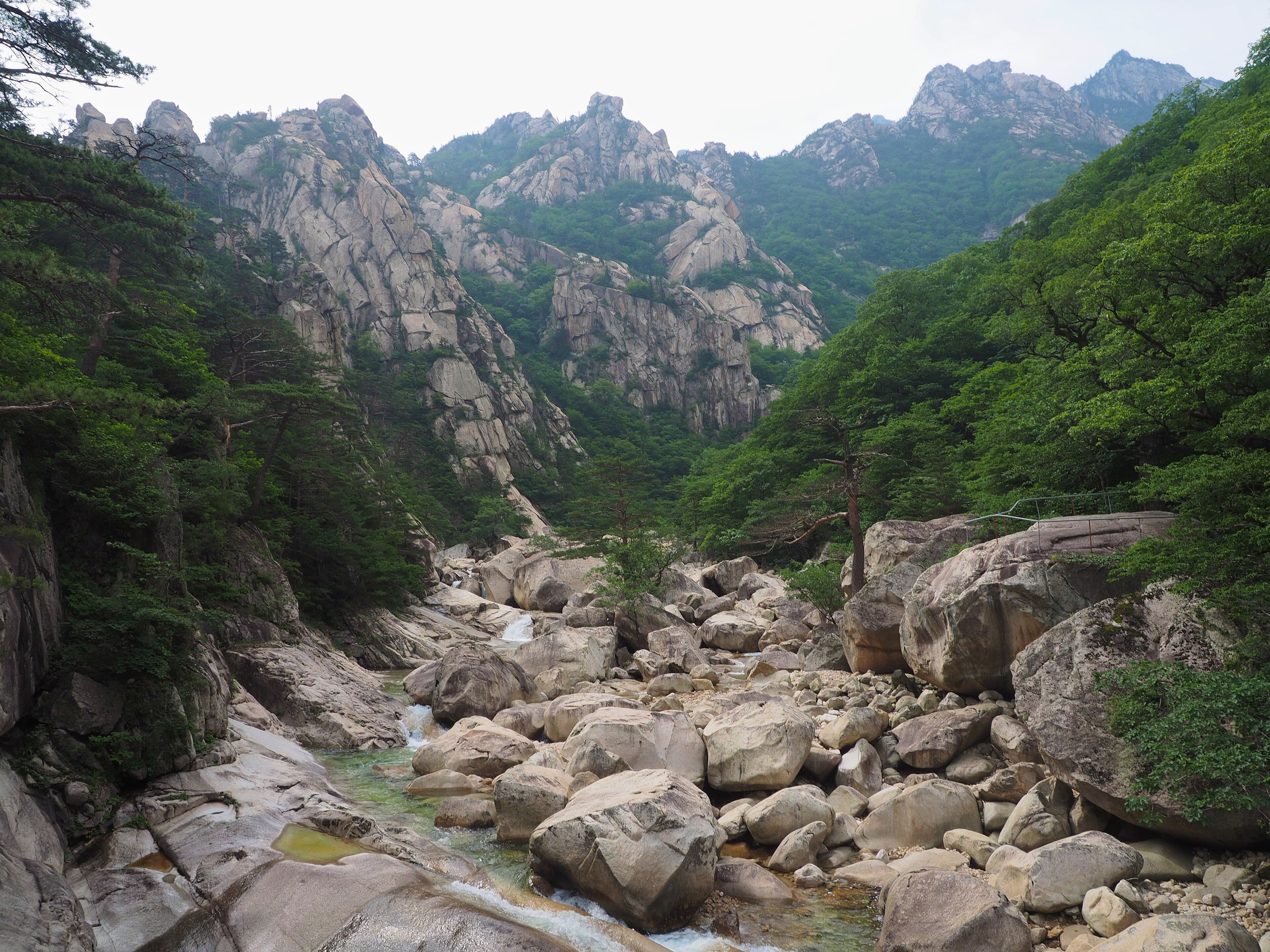
The mountains are made of granite, a hard rock that has been worn by wind, water and ice over millions of years into the dramatic spires and cliffs seen today. There are more than a thousand named peaks, and pathways lead visitors through gorges where waterfalls tumble between moss-covered boulders.
In autumn the whole landscape turns brilliant shades of red, orange and gold as the maple trees change colour. In spring, pale pink cherry and plum blossoms appear on the lower slopes. Artists have painted Mount Kumgang in every season, and its image appears in traditional Korean embroidery and screens.
The area is rich in wildlife. Spotted deer pick their way through the forest, and many species of birds nest among the crags. Clear mountain streams full of fish run between the rocky ridges.
Mount Kumgang has been celebrated in Korean culture for at least 1,500 years. Classic poems describe the feeling of walking among the peaks as like stepping into a painting. The name 'Diamond Mountain' refers not to gems underground but to the brilliant way the granite glitters in sunlight.