
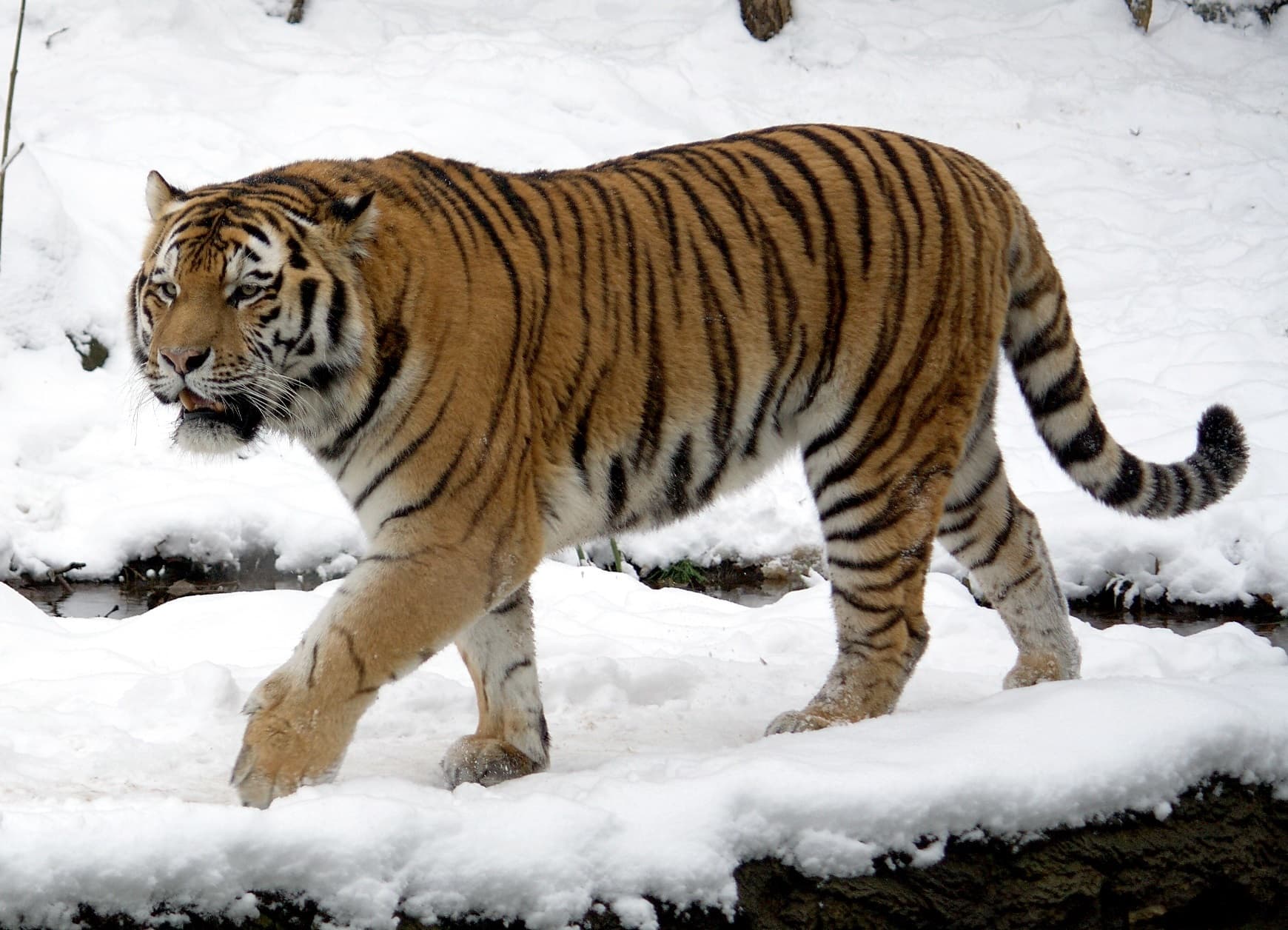
Korean tigers are enormous: a fully grown male can be three metres long from nose to tail-tip and weigh more than 300 kg - heavier than a baby grand piano. Their thick, pale orange fur with black stripes helps them blend into snowy forest in winter. Huge paws act like snowshoes, keeping them from sinking too deep.
Tigers are solitary hunters. They are patient, sometimes waiting for hours before springing on prey. They eat deer and wild boar, and can drag an animal far heavier than themselves. A tiger's roar can be heard up to three kilometres away.
In Korean culture the tiger is seen as brave, dignified and full of energy. Tigers appear as guardians in folk paintings called 'minhwa', sometimes drawn in a friendly, almost comical style. In many old stories, a clever tiger protects the forest and its creatures.
Conservation efforts in the mountain forests of the Korean peninsula are giving tigers more space and food. Protecting the big forested mountain areas - such as those around Mount Paektu - is essential for their future.