
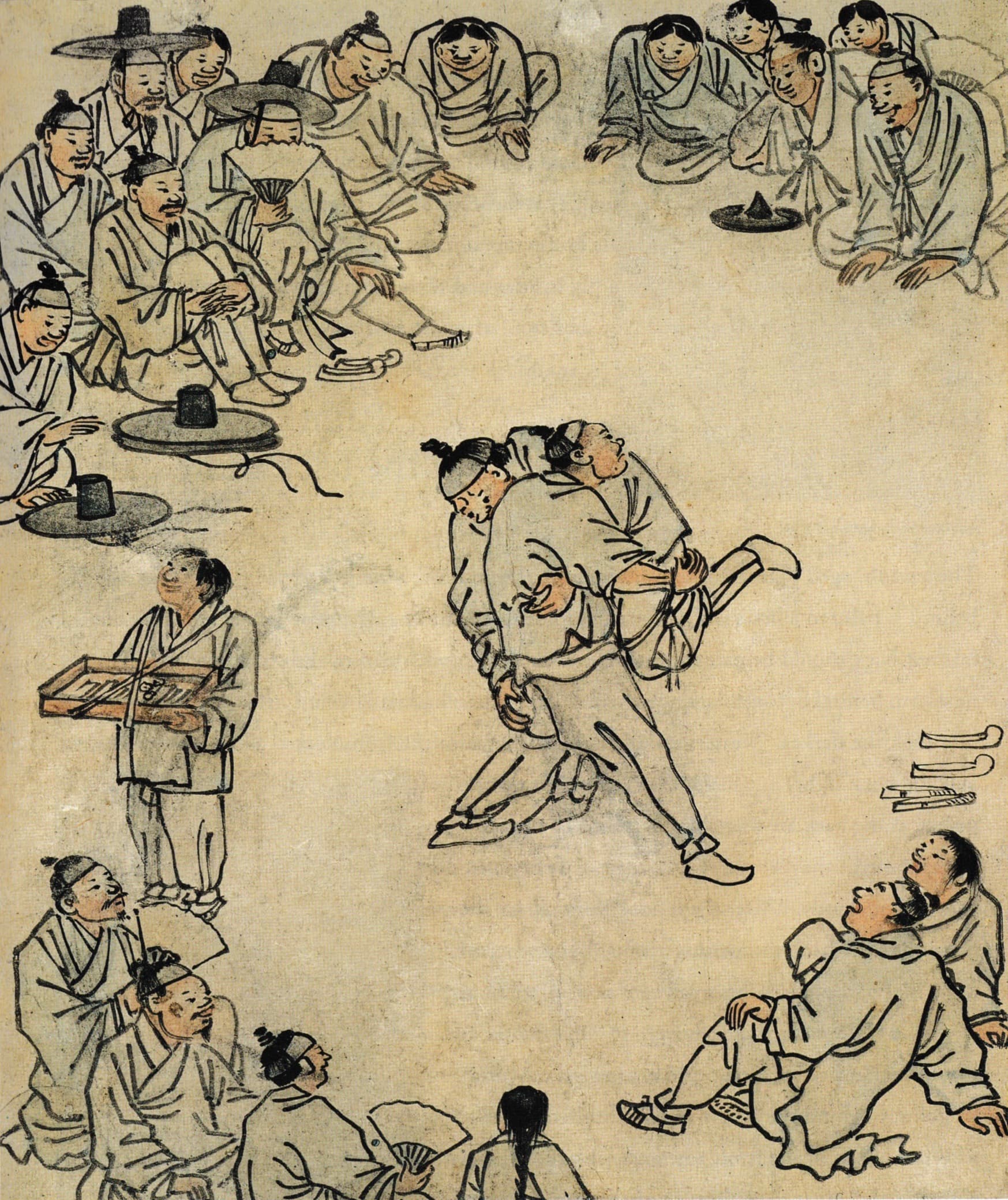
Ssireum matches take place in a circular ring filled with soft sand. Both wrestlers kneel facing each other, each gripping the other's satba - a long cloth tied around the waist and thigh. When the signal is given, they stand and immediately begin to push, pull, lift and twist, looking for the perfect moment to throw.
There are about 20 recognised ssireum techniques, with names like 'ankle trip', 'inner thigh lift' and 'back-arch throw'. A good ssireum wrestler needs strength but also agility, timing and the ability to read what their opponent is about to do. Smaller wrestlers regularly defeat much heavier opponents using clever technique.
Ssireum has traditionally been competed at village festivals and harvest celebrations. The champion at major festivals received an ox as their prize - a very valuable award for farming communities. Even today, the winner of a big ssireum tournament may receive a ceremonial ox.
Ssireum has been depicted in paintings found in ancient Korean tombs, showing that the sport has been enjoyed for at least 1,500 years. It is still widely played and watched today, with professional competitions broadcast on television.