
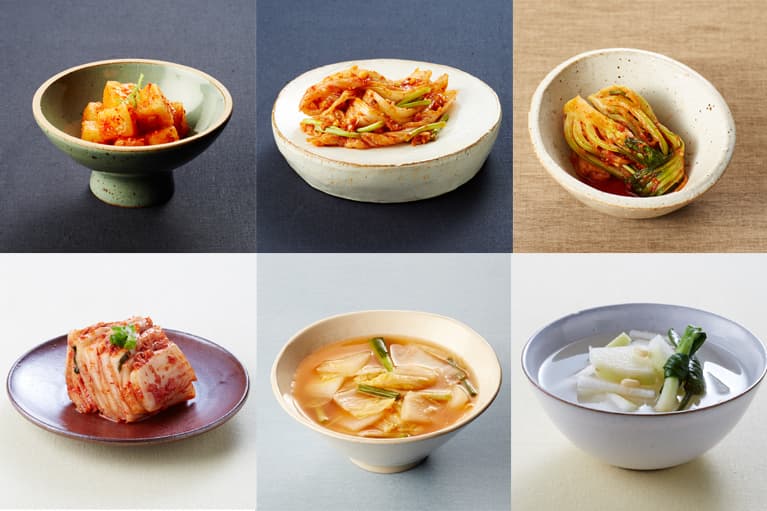
Making kimchi begins with salting the cabbage to draw out moisture, then rinsing it and mixing it with a paste of chilli, garlic, ginger, spring onions and other flavourings. The mixture is packed into jars or pots and left to ferment for anything from one day to several years. Older kimchi has a deeper, sourer flavour.
There are hundreds of varieties of kimchi. Baechu kimchi uses napa cabbage and is the most common. Kkakdugi uses cubes of radish. Some kimchi is white with no chilli, some is fiery red. In different seasons, different vegetables are used - spring brings fresh green kimchi, winter brings the classic red-cabbage style.
Traditionally, families made a whole year's supply of kimchi together in a big community event in late autumn called 'kimjang'. Neighbours helped each other chop, mix and pack hundreds of cabbages. UNESCO recognises kimjang as an important intangible cultural heritage.
Kimchi is now eaten and made around the world, but it began on the Korean peninsula many centuries ago. Scientists have found that fermented vegetables similar to kimchi were eaten in Korea as far back as 2,000 years ago. Today it is one of the best-known Korean foods globally.