
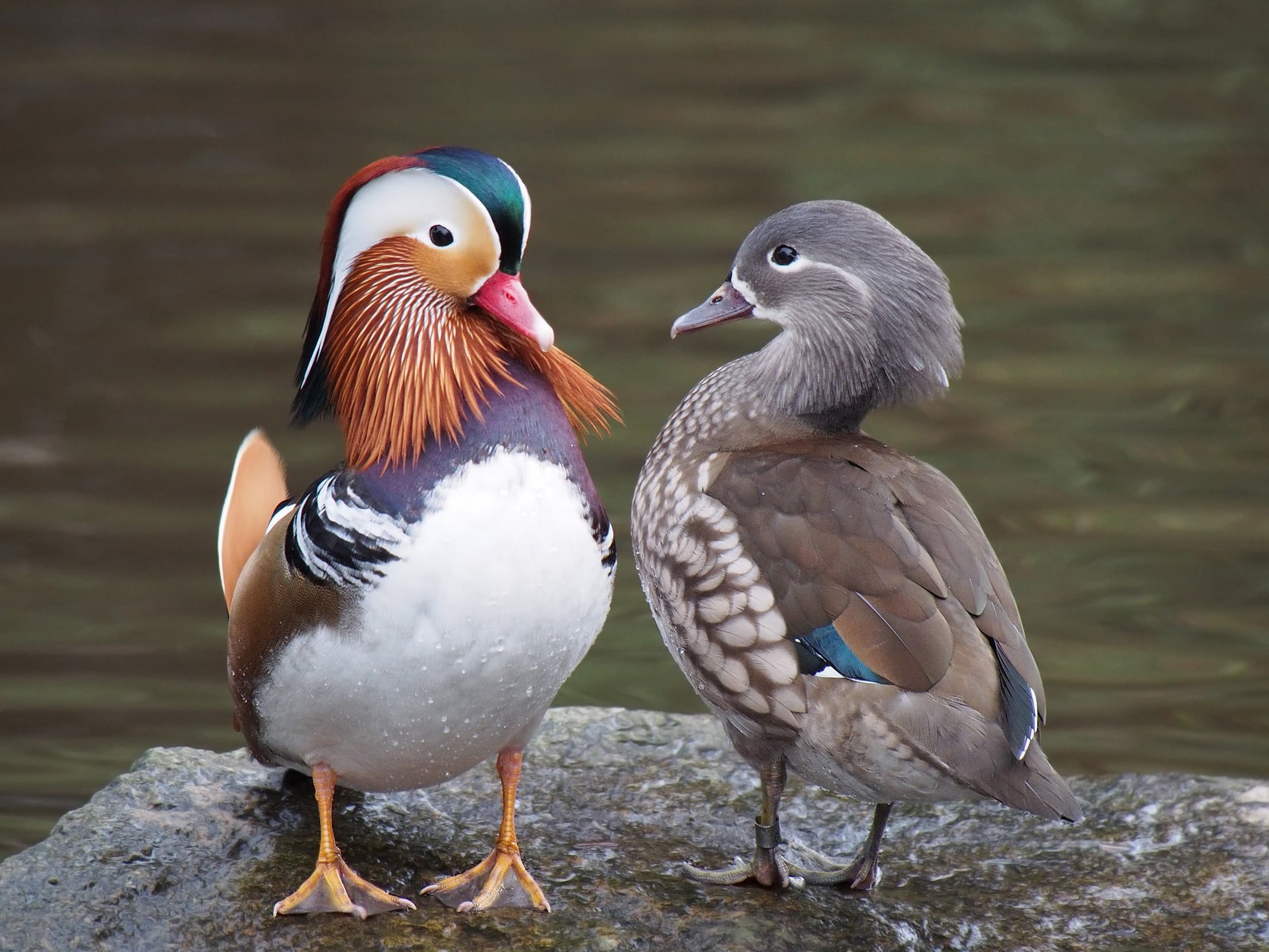
Male Mandarin ducks grow special sail-shaped orange feathers on their wings each breeding season - these stick up like little fans and are unique among ducks worldwide. After breeding season the male moults into a plainer brown plumage that looks a bit like the female's. By winter the brilliant colours are back.
Mandarin ducks are unusual among ducks because they nest in holes in trees, sometimes high up above the ground. When the ducklings hatch, they jump down from the nest hole and bounce safely on the leaf-litter below, then follow their mother to the nearest water.
These ducks eat seeds, acorns, small fish, frogs and snails. They prefer quiet streams and ponds under woodland canopy, where overhanging branches give them cover. In autumn they gather near oak trees to eat fallen acorns.
In East Asian art and culture, Mandarin ducks are traditionally a symbol of love and happiness because pairs are often seen swimming close together. They appear in Korean embroidery, wooden carvings and on decorative items given as gifts.