
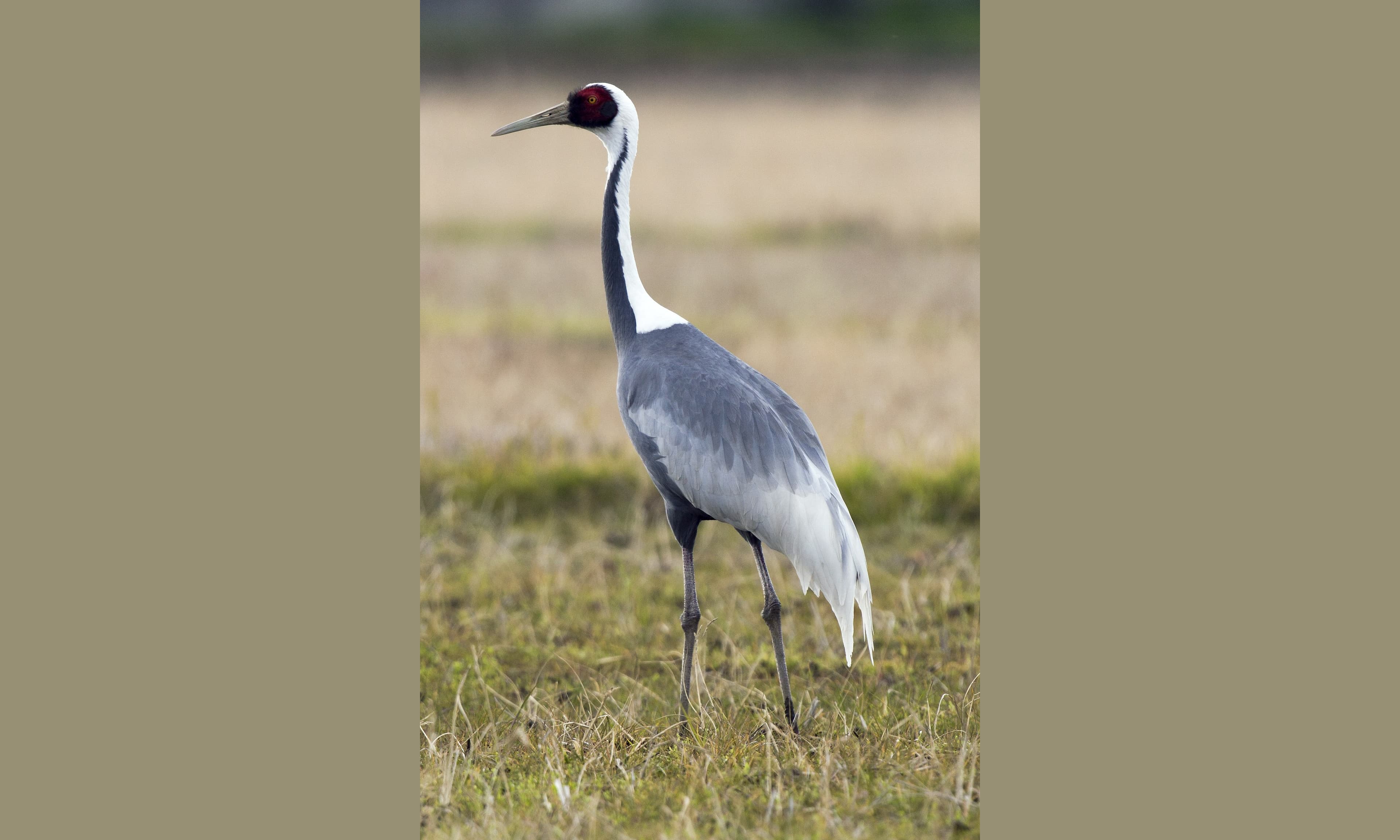
White-naped cranes spend the warm summer months breeding in the wetlands of Russia, Mongolia and north-east China. As winter approaches, they gather into large flocks and migrate south, crossing mountain ranges and wide rivers to reach the warmer wetlands of the Korean peninsula where food is easier to find.
These birds have an extraordinary courtship dance. Pairs bow, leap and spread their wings to each other in a display that can go on for many minutes. Once paired, cranes often stay together for life. Their bugling calls echo across the marshes at dawn.
White-naped cranes feed on roots, seeds, insects and small fish which they find by probing the muddy edges of rivers and marshes with their long bills. They roost in shallow water at night, where they are safer from foxes.
In Korean art and embroidery the crane appears on screens, teacups, silk robes and paper. Folding paper cranes is a traditional craft enjoyed across East Asia. The white-naped crane is listed as a vulnerable species, and wetland conservation in the Korean peninsula is important for its survival.