
Classroom lesson · Apamea · 🇸🇾 Syria

Apamea

Ancient city with the longest colonnade street in the Roman world

Photo · Wikimedia Commons

What is it?

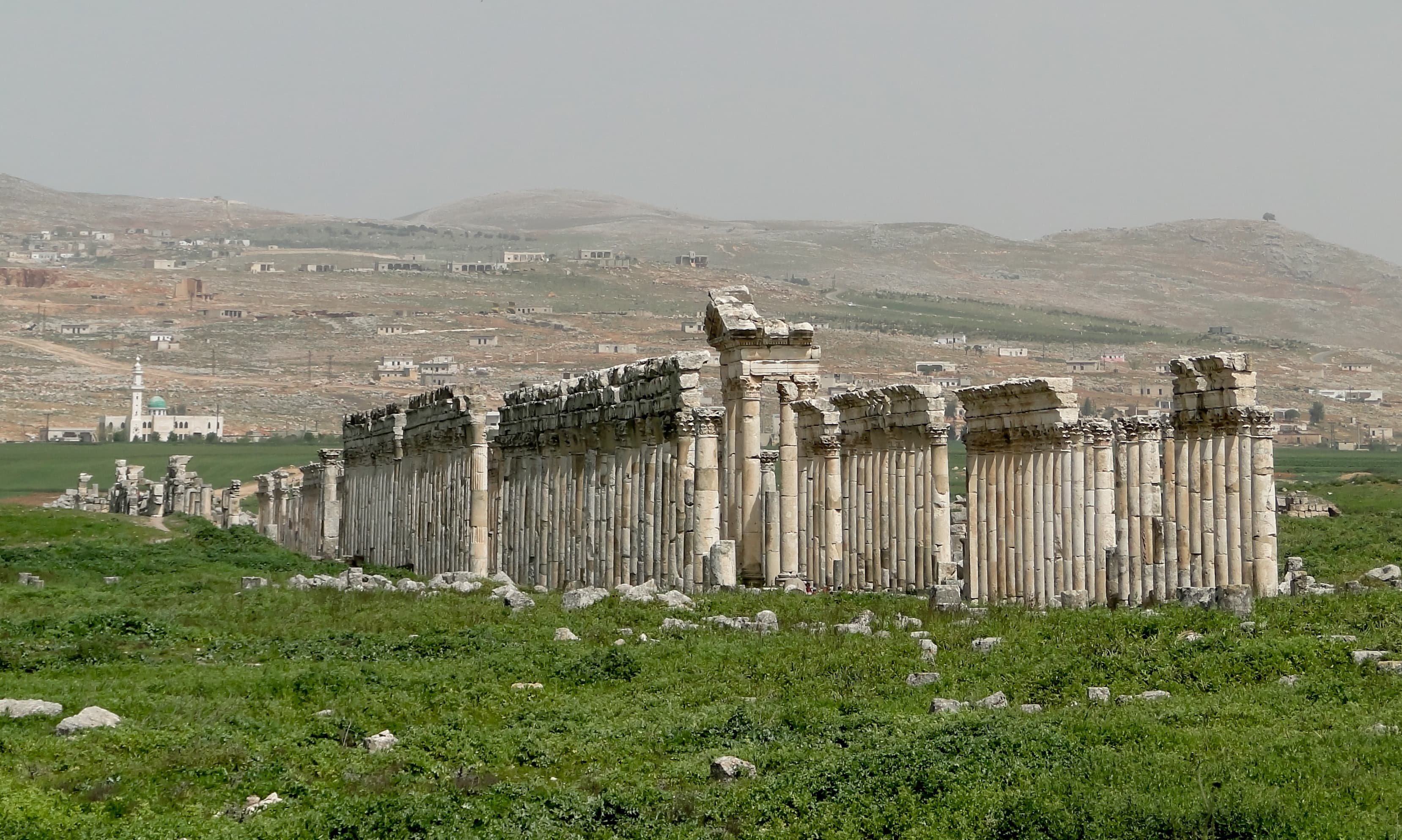
Apamea is an ancient ruined city in northern Syria that was once one of the largest cities in the Roman world. It is famous above all for its extraordinary main street: a colonnade nearly two kilometres long, lined on both sides with tall columns decorated with spiral fluting - giving them a barley-sugar twist look. It is one of the most remarkable archaeological sights in the Middle East.

Tell me more

At its height around 2,000 years ago, Apamea may have had as many as 500,000 people living there - which would have made it one of the biggest cities on Earth at the time. Its position in a fertile river valley made it wealthy, and trade routes from across the region passed through it.

The main street - called the Cardo Maximus - is 37 metres wide and nearly 2 kilometres long. That is wider than a four-lane motorway and almost as long as 20 football pitches end to end. The columns that line it have a distinctive spiral decoration carved into them, which is unusual among Roman colonnades and gives Apamea a unique look.

Apamea was also famous in the ancient world for its elephant stables. The kings who ruled the region before the Romans kept war elephants here, and ancient writers recorded that hundreds of elephants were trained and housed in the city. Archaeologists have found remains of huge stables that may have held them.

Today, Apamea is an open landscape of columns, scattered stone blocks and mosaic fragments. The site museum used to hold spectacular floor mosaics - detailed pictures made from tiny coloured tiles - showing hunting scenes, mythological stories and geometric patterns. These mosaics are some of the finest examples of ancient artistic craft ever found.

In the classroom

Walk your class through this in 15 minutes.

Talk together

Discussion prompts

  1. 01Why would a city in a fertile river valley grow so large and wealthy?
  2. 02Imagine walking down a street nearly 2 kilometres long lined with tall twisted columns. What words describe how it would feel?
  3. 03Ancient mosaics told stories in pictures made of tiny tiles. How is this similar to or different from how we tell stories today?
Try this

Classroom activity

Create your own mini-mosaic! Cut small squares from coloured paper (or draw a grid and colour in the squares). Arrange them to make a picture of an animal - just like ancient Apamea's mosaic artists. Keep the squares small and close together for the best effect.