
Classroom lesson · Palmyra · 🇸🇾 Syria

Palmyra

A 2,000-year-old desert city frozen in stone

Photo · Wikimedia Commons

What is it?

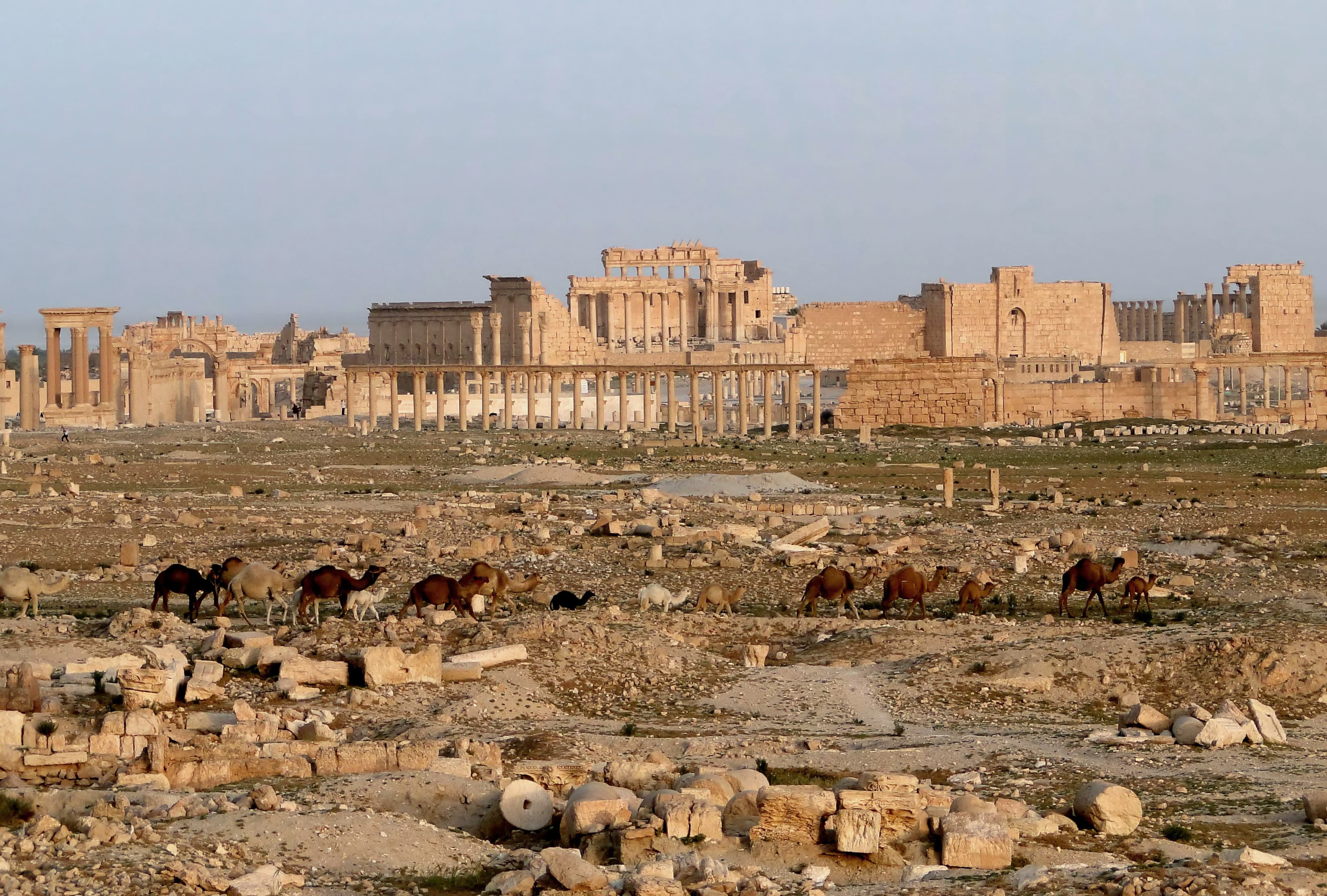
Palmyra is an ancient city built in the middle of the Syrian desert about 2,000 years ago. Its ruins stretch across the sand like a giant open-air sculpture park, with tall columns, grand archways and carved temples. UNESCO has named it one of the most important heritage sites on Earth.

Tell me more

Palmyra sits at an oasis - a place in the desert where underground water reaches the surface. Because of that water, the city became a famous stopping point for merchants crossing between the Mediterranean Sea and Mesopotamia (modern Iraq). Camel caravans loaded with silk, spices and glassware passed through here for hundreds of years.

At its height, Palmyra was home to around 200,000 people and ruled by its own queen, Zenobia, who was famous for her bravery and love of learning. The city was connected to Rome but kept its own art style - you can see it in the carved faces on ancient tombs, which have big, forward-looking eyes quite different from Roman art.

The Great Colonnade is one of the most famous sights: a wide street flanked by hundreds of tall columns, stretching for more than a kilometre. Imagine walking down your school corridor, but the walls are replaced by stone pillars taller than a house, and the ceiling is open sky and stars.

Artists and archaeologists have spent decades studying Palmyra's carvings, mosaics and stone inscriptions. The city's script - Palmyrene - mixed elements of Aramaic and Greek and is still being decoded by scholars today. Every carved stone is a message waiting to be read.

In the classroom

Walk your class through this in 15 minutes.

Talk together

Discussion prompts

  1. 01Why would a city in the middle of a desert become one of the most important trading places in the ancient world?
  2. 02Palmyra had its own writing system. What would it feel like to find a carved stone with words you couldn't read yet?
  3. 03Queen Zenobia spoke five languages. Why might speaking many languages be useful for a leader?
  4. 04If you could walk down Palmyra's Great Colonnade 2,000 years ago, what sights, sounds and smells do you think you would experience?
Try this

Classroom activity

Look up images of Palmyra's carved stone portraits. Notice how the eyes look straight at you. Draw your own 'Palmyrene-style' portrait of yourself or a friend using that same big, forward-facing eye technique. Label it with made-up symbols to create your own ancient inscription.