
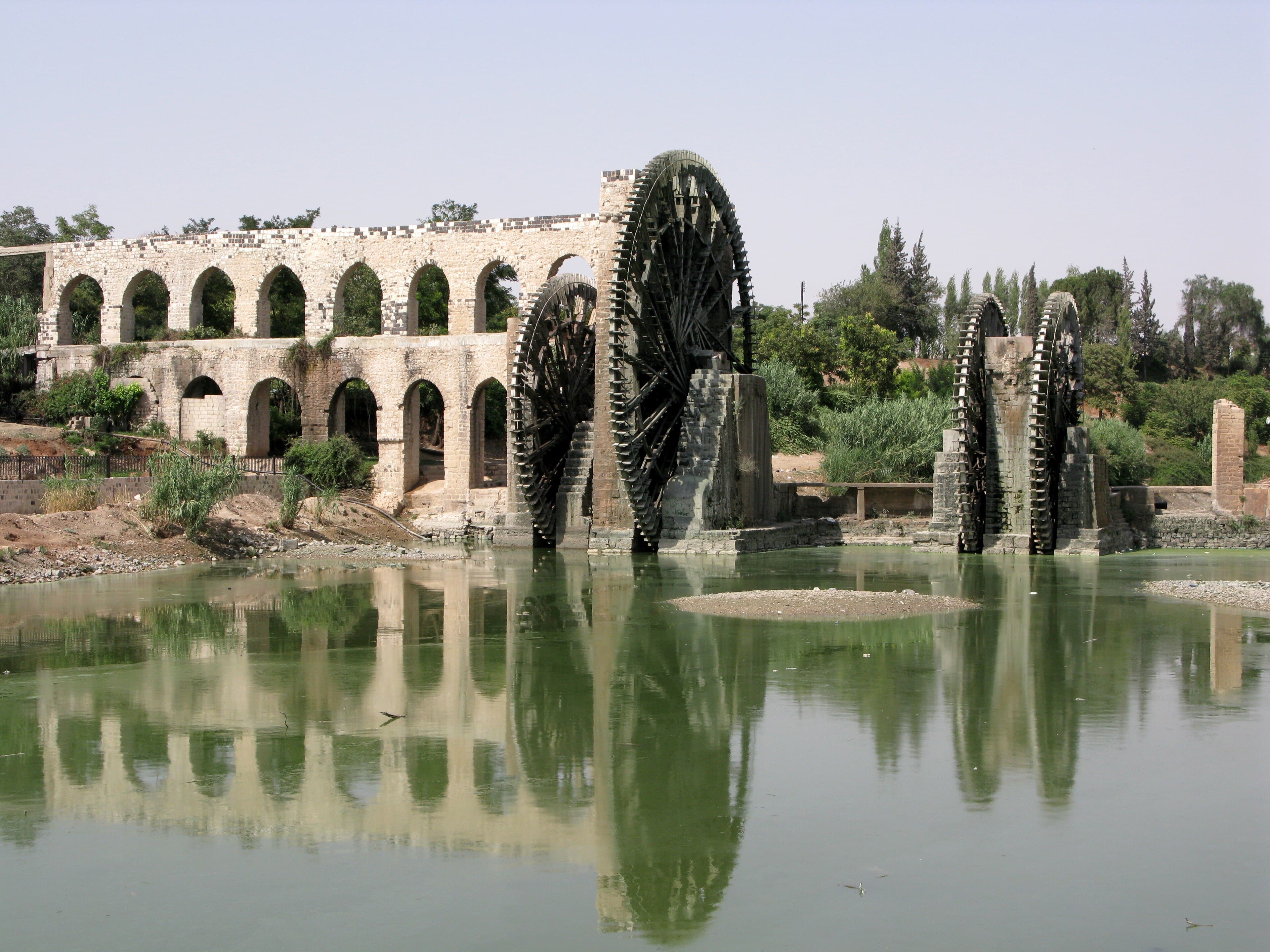
A noria is a type of waterwheel with small wooden pots or buckets attached around its edge. As the current of the river pushes the wheel around, the pots dip into the water at the bottom, fill up, rotate to the top and tip the water into a channel or trough. From there the water flows along stone aqueducts into the fields and orchards on the higher ground around the city.
The largest noria in Hama - called al-Muhammadiyya - has a diameter of about 20 metres and is thought to be one of the largest waterwheels ever built by humans. At its top, the water pots tip their contents into a channel that carries water 80 metres above the river level. This was ancient engineering of a very high order.
There are 17 norias still standing along the river in Hama today, and several of them still turn. The sound they make is a constant wooden groan and creak - locals say you can hear the norias singing to the city. Poets have written about the sound for centuries, and it is considered part of the identity of Hama.
Before electric pumps existed, norias were essential technology across the Middle East, North Africa and southern Europe. Hama's are special because they are so old, so large and so well documented in historical writing. They are a reminder that people solved difficult engineering problems - how to move water uphill - long before electricity or motors were invented.