
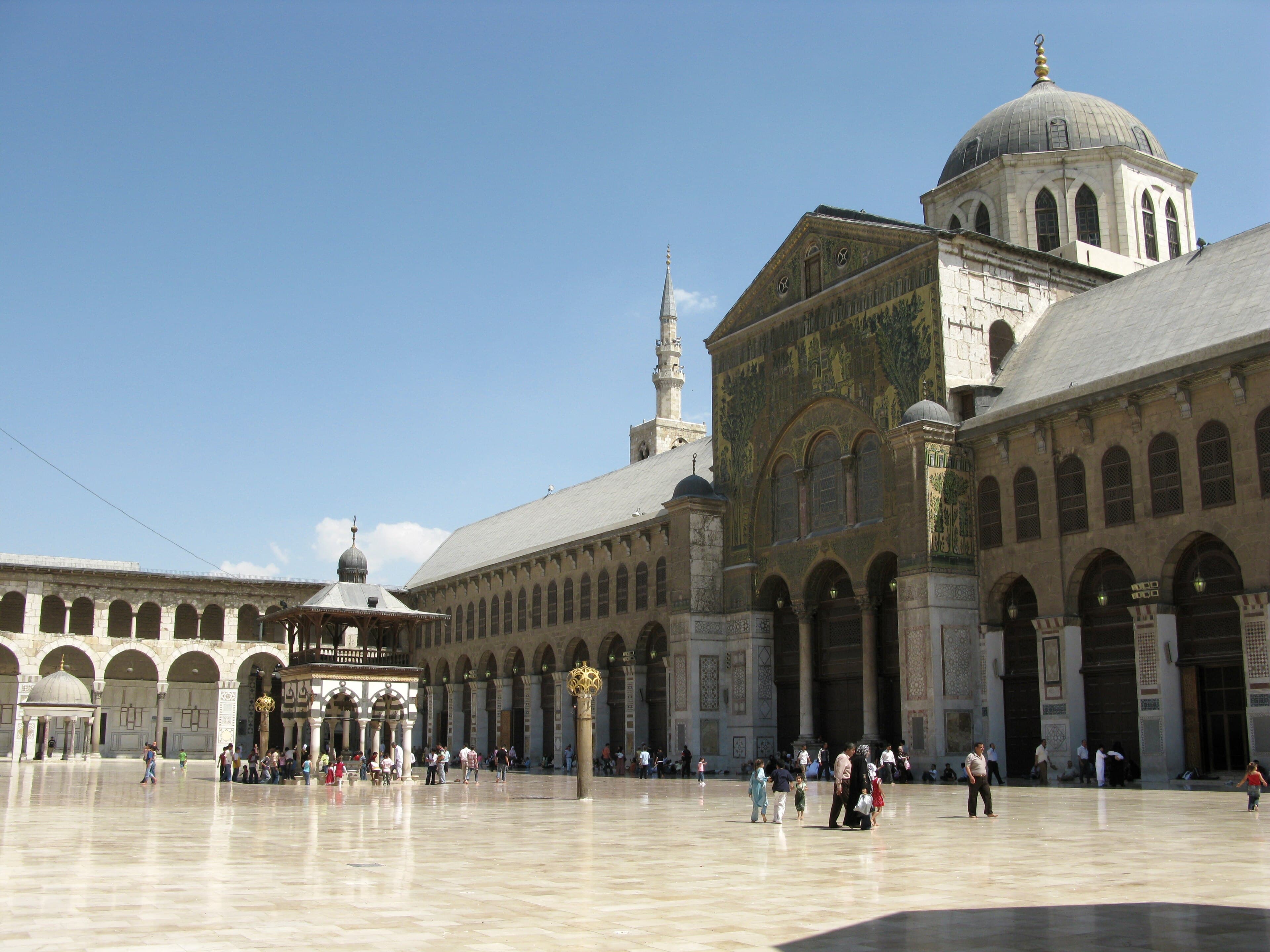
When people say Damascus is 'continuously inhabited', they mean no one ever left and the city went dark - generation after generation, somebody has always been living here, cooking, trading and building. That makes it an extraordinary living link between the present and the very distant past. The Old City's street plan is so ancient that some alleyways have been in the same place since Roman times.
The covered market called the Souq al-Hamidiyyeh is one of the most famous in the world. A long iron roof, punctured with small round holes, creates shafts of light that fall like spotlights on the stalls below. Merchants sell fabrics, sweets, spices, soaps, and beautiful hand-made items. The smells and sounds hit you before you even step inside.
Damascus is also famous for a craft called Damascene metalwork - thin threads of gold and silver hammered into patterns on steel. The word 'damask' (a type of patterned fabric) comes from Damascus, because the city's weavers were so skilled that their name became the name of the style.
Old houses in Damascus often look plain from the outside, but step through the front door and you find a courtyard with a fountain at the centre, lemon trees, climbing plants, mosaic floors and painted wooden ceilings. This inside-outside design kept homes cool in summer and felt like a private garden hidden behind every door.