
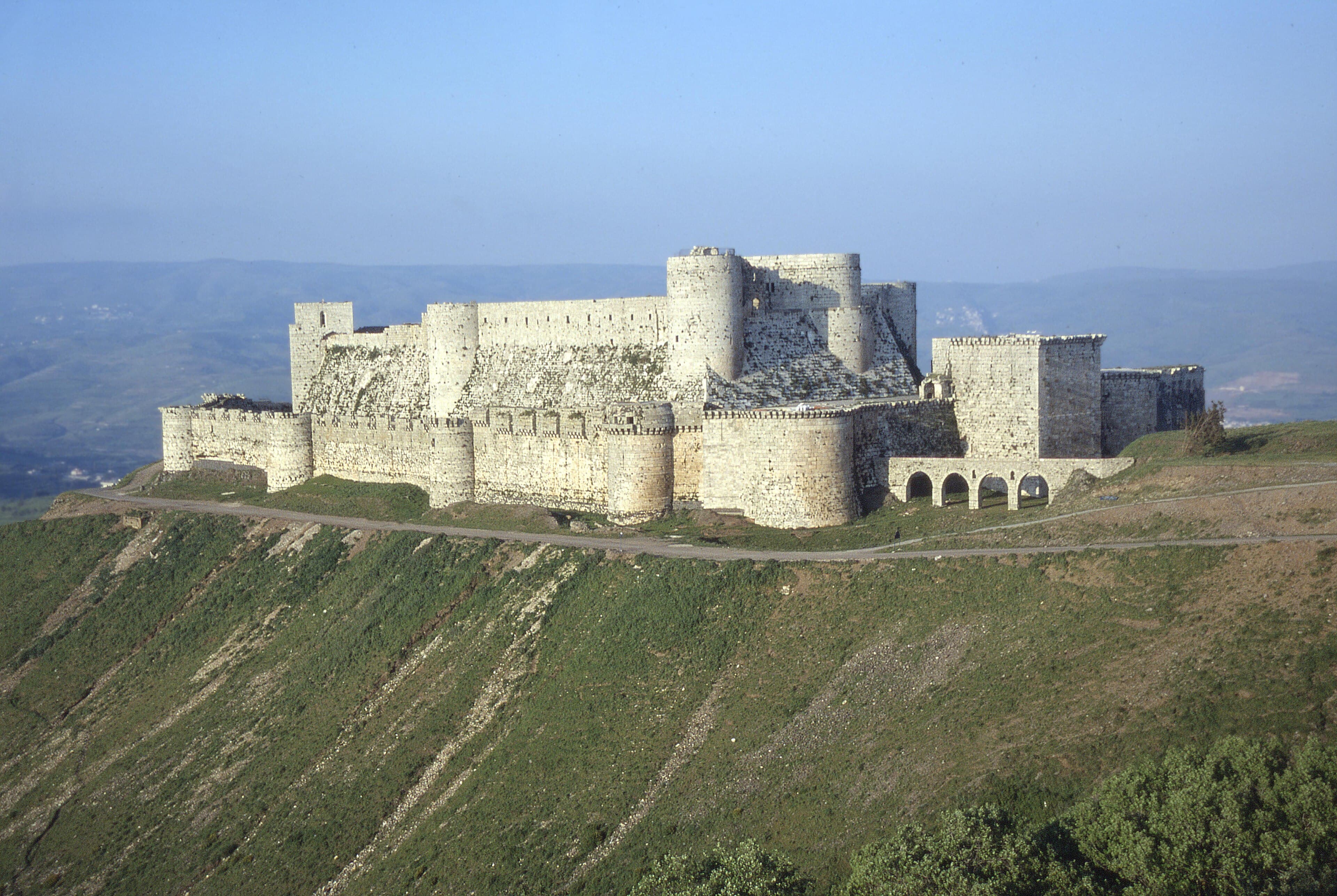
The castle sits 650 metres above sea level, which means it could be seen for miles around. Its builders chose the hilltop deliberately - a lookout at the top could spot anyone approaching from far away, and the steep slopes made it very hard for any attacker to reach the walls. The view from the top today sweeps across forests, valleys and distant mountains.
Inside the walls there are two rings of fortification, one inside the other, with a deep moat between them. If you walked through the gates, you would find great halls, a chapel, huge underground storage rooms for grain and oil, a watchtower, and even an aqueduct that carried water right inside the castle walls so the people living there always had water to drink.
The castle could hold a garrison of 2,000 soldiers and store enough food to last five years. That is like your entire school surviving inside one building for five whole years without going to a supermarket. The storerooms are so big they feel like underground streets.
Travellers and architects from across Europe have visited Krak des Chevaliers and used it as a model for how to build strong, beautiful castles. The English writer T.E. Lawrence once called it 'perhaps the best preserved and most wholly admirable castle in the world' after exploring it as a young student.