
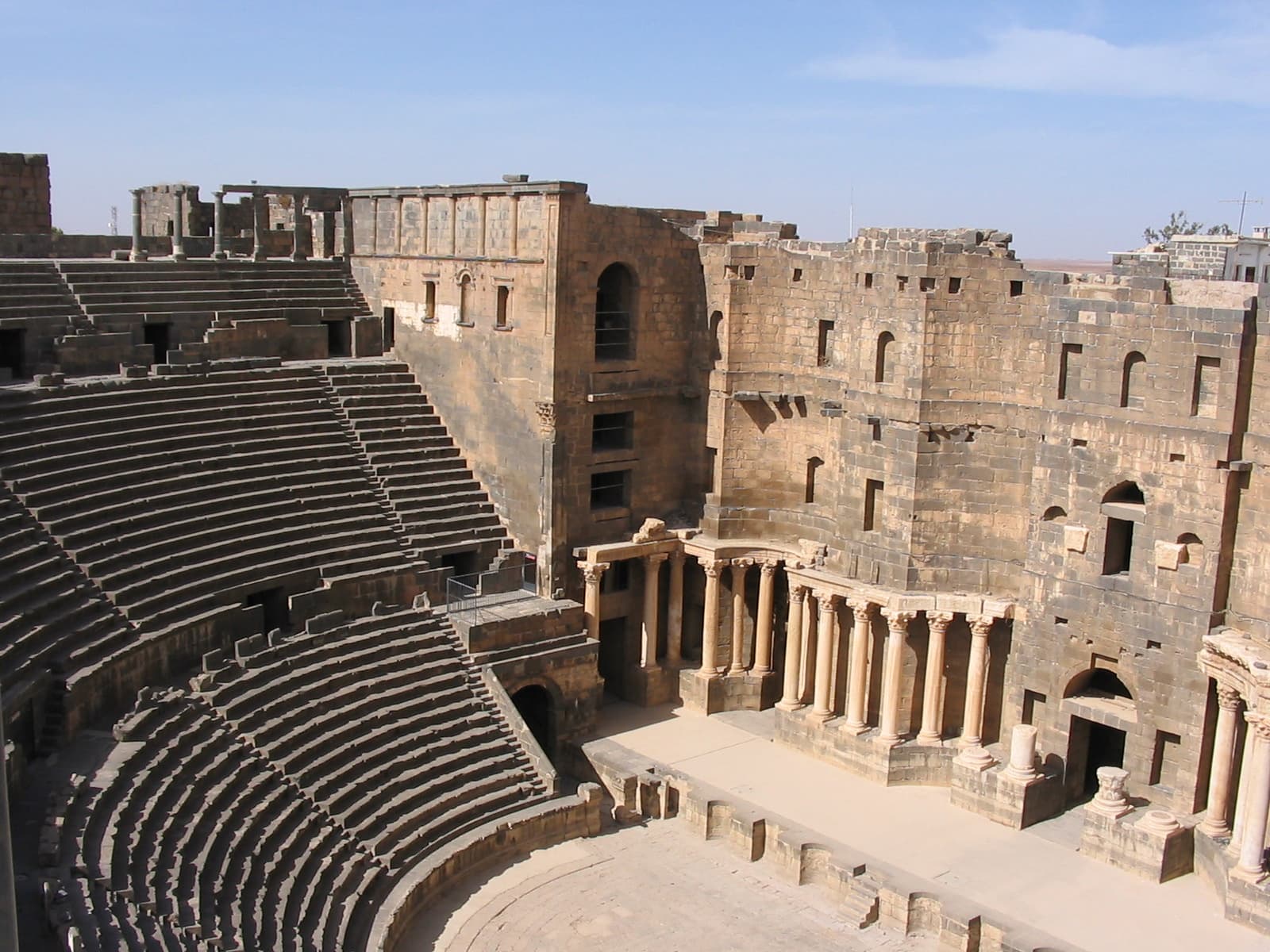
Roman theatres were the cinemas and concert halls of the ancient world. Audiences would sit in the curved stone seats - rising in a great semicircle - and watch plays, music performances and poetry recitals below. The Bosra theatre is particularly special because its stage wall, the tall decorative backdrop behind the performers, is almost completely intact. Most Roman theatres have lost this part entirely.
At some point in the medieval period, the people of Bosra built strong towers and walls all around the outside of the theatre, turning the whole structure into a fortified castle. This was an accidental act of conservation - the castle walls protected the theatre inside from being taken apart for building materials, which is what happened to most other Roman theatres.
The acoustics of the Bosra theatre are remarkable. Because of the curved shape of the stone seating and the tall stage wall, a person standing at the centre of the stage can be heard clearly by everyone in all 15,000 seats - without any microphones or speakers at all. Architects still study Roman theatres to understand this ancient sound engineering.
The city of Bosra around the theatre also contains Roman columns, a grand arch, ancient baths, a Byzantine cathedral outline and a maze of basalt-stone streets. Basalt is a dark volcanic rock found in the area, and whole parts of the city are built in it, giving Bosra a striking dark-coloured look quite different from other ancient sites.