
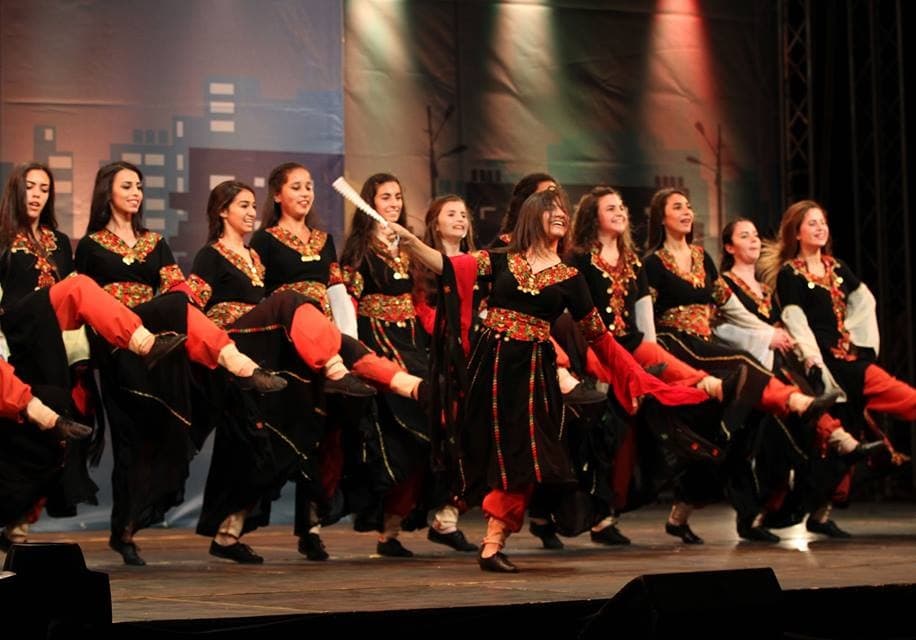
The word 'dabke' comes from an Arabic word meaning 'stomping of the feet'. The dance is built around strong rhythmic stamps and hops, led by a leader at the front of the line - the 'lawweh' - who performs the most elaborate moves and signals changes in step to the rest of the line. The footwork can be very intricate, but even beginners can join a line and follow along.
No one knows exactly how old dabke is, but it is thought to have ancient roots. One story says it began as a practical activity: when building houses, villagers would stomp on the mud roof together to compact it and stop leaks. Whether that story is true or legend, it captures the community spirit of the dance - everyone moving together with a single purpose.
Dabke music is typically played on the mijwiz (a double-reed pipe), the tableh (a hand drum) and sometimes the oud. The rhythm is lively and driving, and the music and dancing feed off each other - faster music makes the footwork more energetic, and a skilled line of dancers inspires the musicians to play faster in return.
At Syrian weddings, dabke is a high point of the celebration. The bride and groom often lead a line of guests, and everyone is expected to join in regardless of age or skill. Young children learn the basic steps by watching and joining the end of the line, picking up the rhythm gradually. It is passed on not through formal lessons but through participation.