
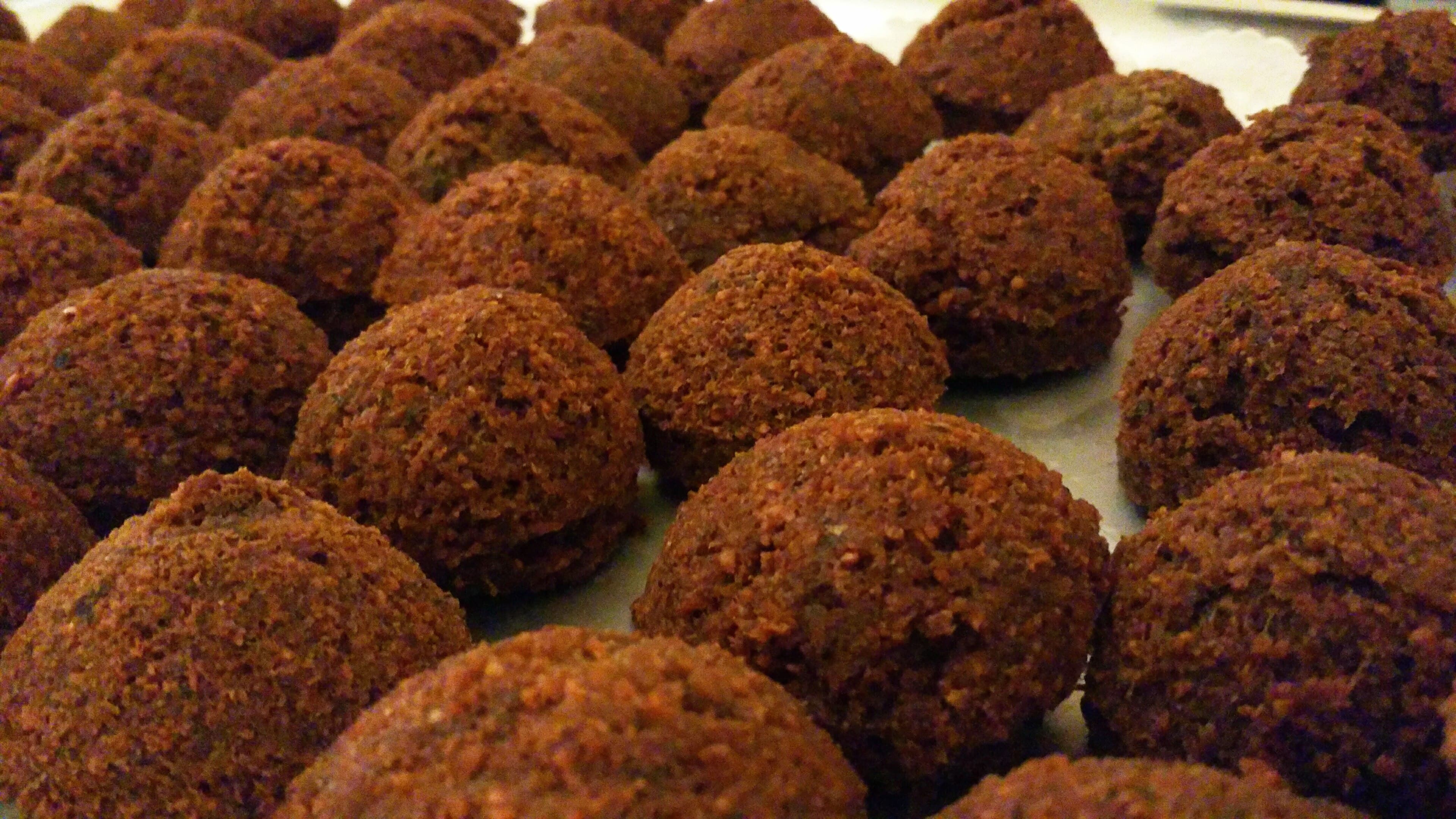
The key ingredient in falafel is the chickpea - a round, pale legume that is one of the oldest cultivated foods in the world. People in the Middle East have been growing and eating chickpeas for at least 10,000 years. Chickpeas are packed with protein and fibre, which means falafel, despite having no meat in it, is a very filling and nutritious food.
To make falafel, chickpeas are soaked overnight until soft, then ground up (not cooked first) with parsley, coriander, garlic, cumin and other spices. The mixture is shaped into balls or patties and dropped into hot oil. The outside becomes beautifully crunchy while the inside stays soft, green-speckled from the herbs, and fragrant.
Falafel is often eaten as street food - bought from a small stall or shop and eaten while walking. A typical serving is wrapped in a soft flatbread with crunchy salad, creamy tahini sauce (made from sesame seeds), pickled vegetables and sometimes chilli. Every falafel seller has their own favourite spice combination.
Falafel has spread from the Middle East to every corner of the world. You can now buy falafel in supermarkets and restaurants across Europe, America, Australia and beyond. It is one of the great success stories of Middle Eastern food culture - a simple ancient recipe that has become truly global.