
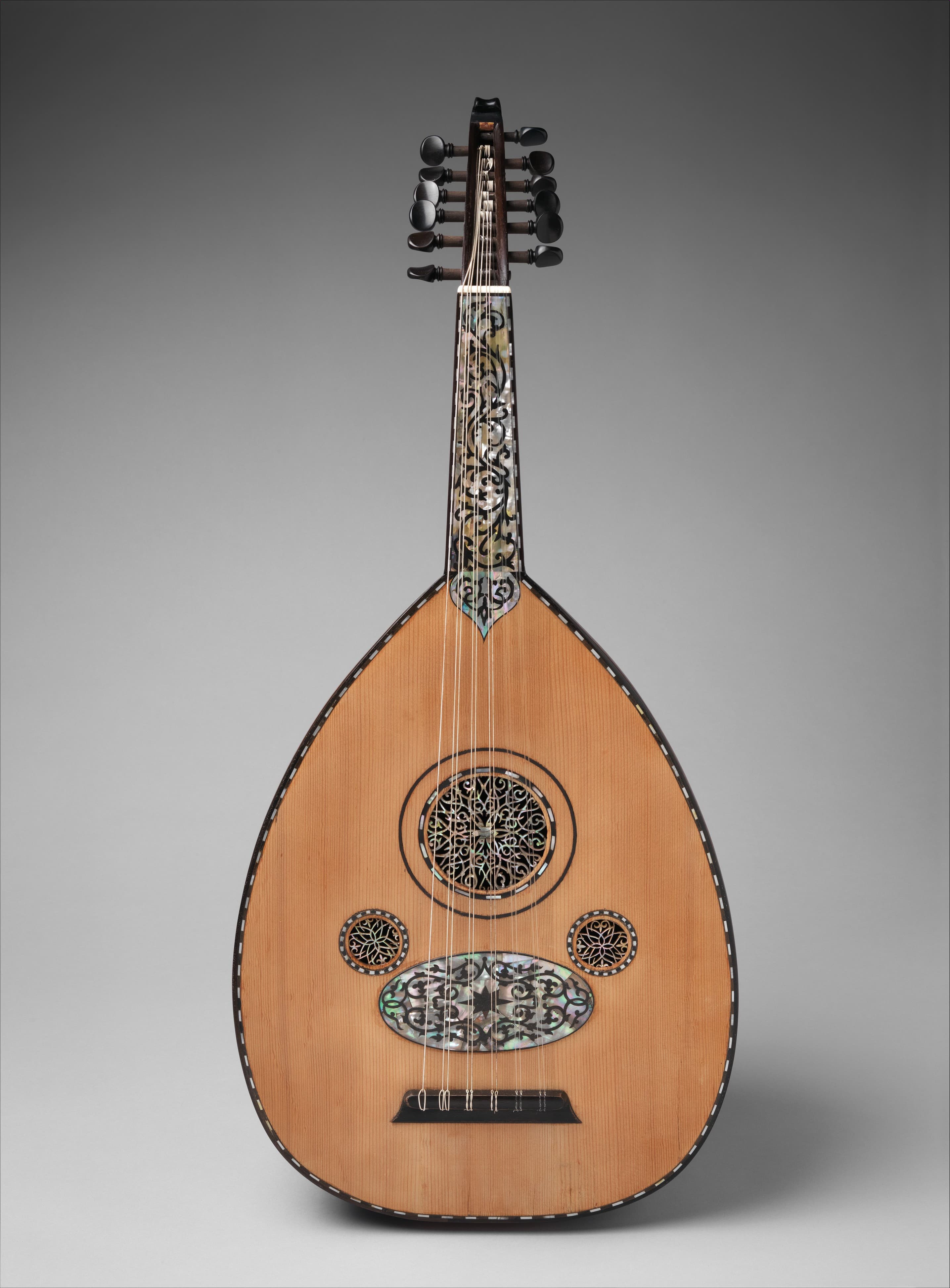
An oud typically has 11 or 13 strings arranged in pairs (called courses), plucked with a long flexible plectrum called a risha (which means 'feather' in Arabic). The body is made from thin strips of wood bent and glued into a deep pear shape, with a carved or decorated sound hole at the front. The back is rounded like a half-melon and has no flat base.
Unlike guitars, ouds have no frets on the neck - the smooth neck allows the player to produce sliding notes and quarter-tones (notes between the notes of a piano). These in-between notes are a fundamental part of Arabic music and give it a richness and expressiveness that is different from Western music.
In Syria, the city of Damascus has traditionally been home to master oud makers who craft the instrument entirely by hand. The wood is chosen carefully - each type of wood affects the sound differently. Cedar, walnut, spruce and rosewood are all used. Making a high-quality oud takes many weeks and requires extraordinary skill and patience.
The oud is played at family celebrations, concerts, in cafes and at informal gatherings. A skilled oud player might improvise for many minutes - no sheet music, just feeling and technique. This improvised style, called 'taqsim', is deeply respected in Arabic music culture and takes years of practice to master.