
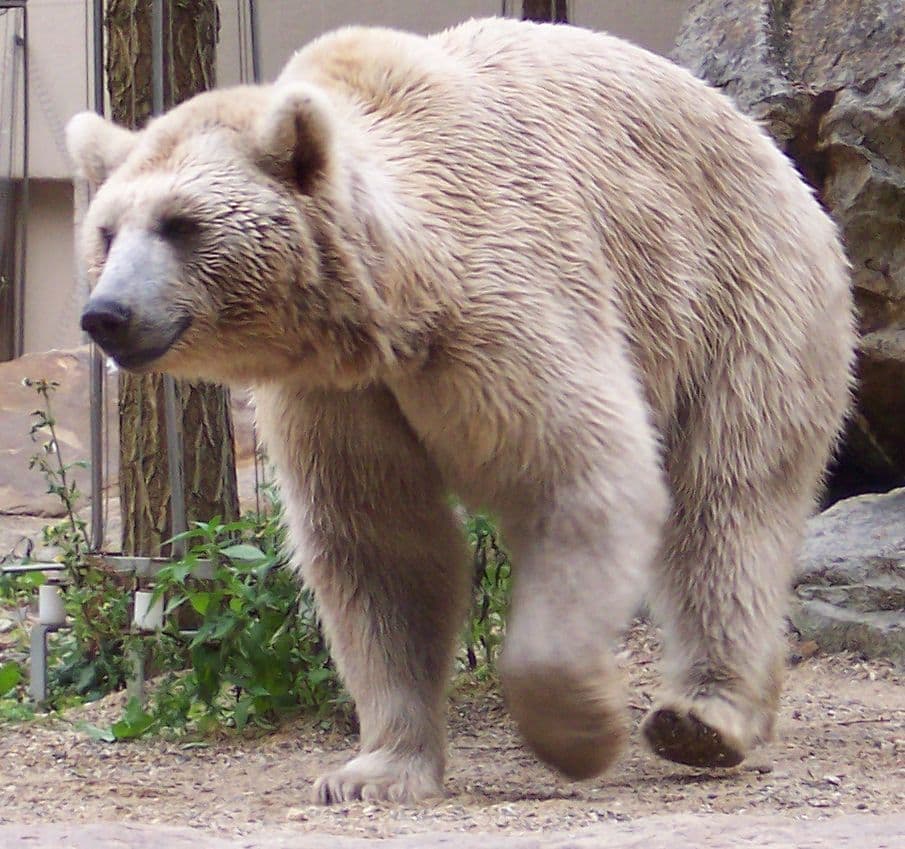
Syrian brown bears are omnivores - they eat plants and animals, but mostly plants. Their diet includes berries, nuts, roots, insects, honey and occasionally fish or small animals. Like all brown bears, they have a brilliant sense of smell - around seven times better than a dog's - which they use to find food across the mountain landscape.
In winter, Syrian brown bears enter a long sleep called torpor (similar to hibernation). They find a sheltered den, slow their heartbeat and breathing right down, and live off stored body fat for months. A female bear may even give birth to her cubs inside the den during this winter rest. The cubs are tiny at birth - about the size of a squirrel - and grow fast drinking their mother's rich milk.
The bears live in the mountainous forests of northwest Syria where the climate is cooler and wetter than the rest of the country. Oak, pine and other trees provide cover and food. The same mountain zone is also home to wolves, wild boar, deer and eagles, making it a rich wildlife corridor.
Scientists and conservationists track Syrian brown bears to understand their habits and help populations survive. Because the bears roam across borders between different countries, international cooperation is needed to protect them - a reminder that wildlife does not recognise borders and nature conservation is a team effort between nations.