
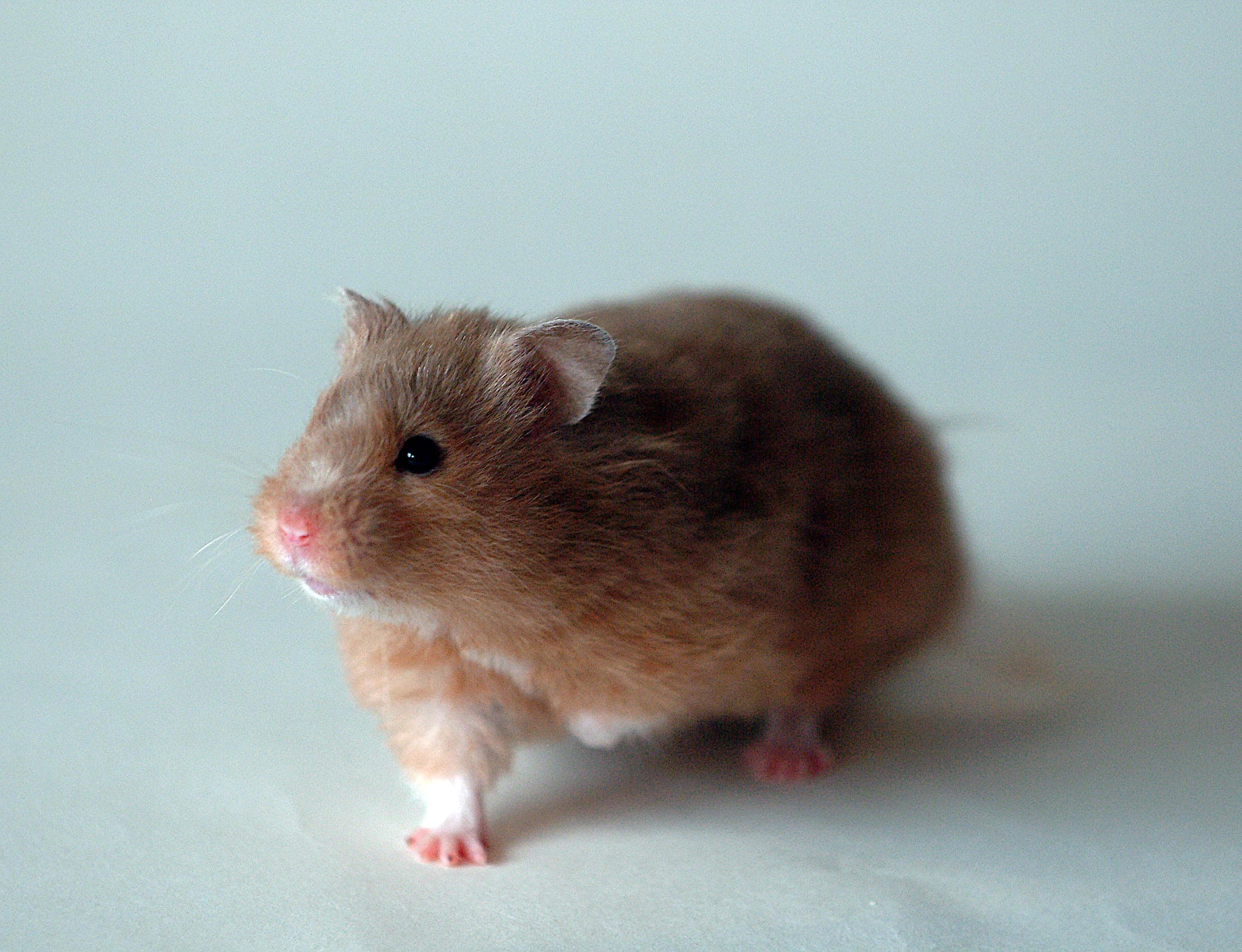
In 1930, a zoologist named Israel Aharoni found a mother hamster and her 12 pups in a burrow in the Syrian countryside near Aleppo. He took them back to a laboratory in Jerusalem to study them. The hamsters bred well in captivity and eventually some were sent to research laboratories and then to pet shops around the world. Within a few decades, the golden hamster had become one of the most popular pets on Earth.
In the wild, Syrian hamsters live alone in deep underground burrows in dry, open countryside. They are nocturnal - most active at night - and they stuff their enormous cheek pouches with seeds, grains and plant material to carry back to a food store in their burrow. The name 'hamster' comes from an old German word meaning 'hoarder'.
Syrian hamsters are solitary animals - in the wild they prefer to live alone and defend their territory from other hamsters. This is why pet hamsters should not be kept together once they are adults. Each hamster considers a large territory its own personal space and can be quite fierce about it.
The wild Syrian hamster is now listed as 'Vulnerable' by scientists - its natural home in the Syrian countryside has become built-up or farmed, leaving less wild land for it. There is an irony here: the animal that has become one of the world's most successful pets is actually quite rare in its original wild home.