
Classroom lesson · Wildlife · 🇹🇬 Togo

African Forest Elephant

A smaller, quieter elephant that lives deep in the forest

Photo · Wikimedia Commons

What is it?

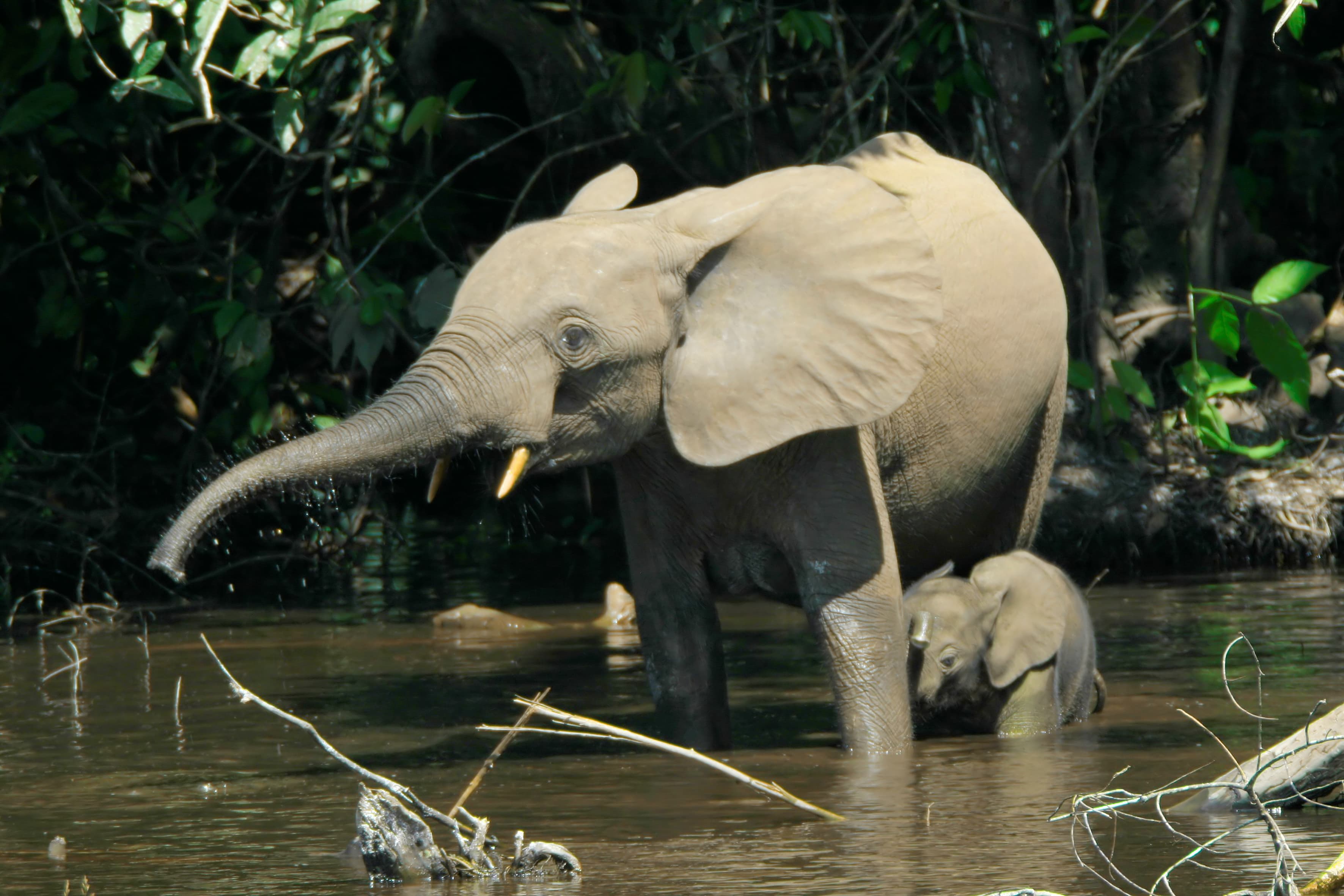
The African forest elephant is a smaller relative of the famous African savannah elephant you might have seen in documentaries. It lives in dense tropical forests and is harder to spot because the trees hide it. Forest elephants are very important for the forest — scientists call them 'forest gardeners' because of the incredible way they help trees spread.

Tell me more

African forest elephants are smaller and have straighter, downward-pointing tusks that help them push through thick undergrowth without getting caught. Their ears are rounder and their skin is often darker than their savannah cousins. Despite being 'smaller', a fully grown forest elephant still weighs around 2,000 kilograms — as heavy as a small car.

Here is why they are called forest gardeners: elephants eat huge amounts of fruit, swallowing the seeds whole. When they walk many kilometres and then deposit those seeds in their dung, the seeds can sprout far from the parent tree. Some large trees in West African forests can ONLY be spread this way — without elephants, those trees would slowly disappear from the forest.

In Togo, forest elephants live mainly in Fazao-Malfakassa National Park. They are shy animals that prefer to move quietly through dense bush, often at dawn or dusk. If you are very lucky and very quiet, you might hear branches snapping before you ever see them — a sign that a forest giant is nearby.

In the classroom

Walk your class through this in 15 minutes.

Talk together

Discussion prompts

  1. 01Elephants help forests grow by spreading seeds. Can you think of other animals that help plants spread their seeds?
  2. 02Forest elephants are harder to spot than savannah elephants. What are the advantages for an animal of being hard to see?
  3. 03If forest elephants disappeared, some tree species might disappear too. Why do you think all the parts of a forest depend on each other?
Try this

Classroom activity

Draw a large tree in the centre of your paper. Around it, draw five smaller trees of the same species growing at different distances. Now draw an elephant somewhere between them, with small seed symbols in its footprints. Add arrows to show how seeds travel from the big tree to each small one via the elephant. Write one sentence explaining what would happen to those small trees if the elephant was not there.