
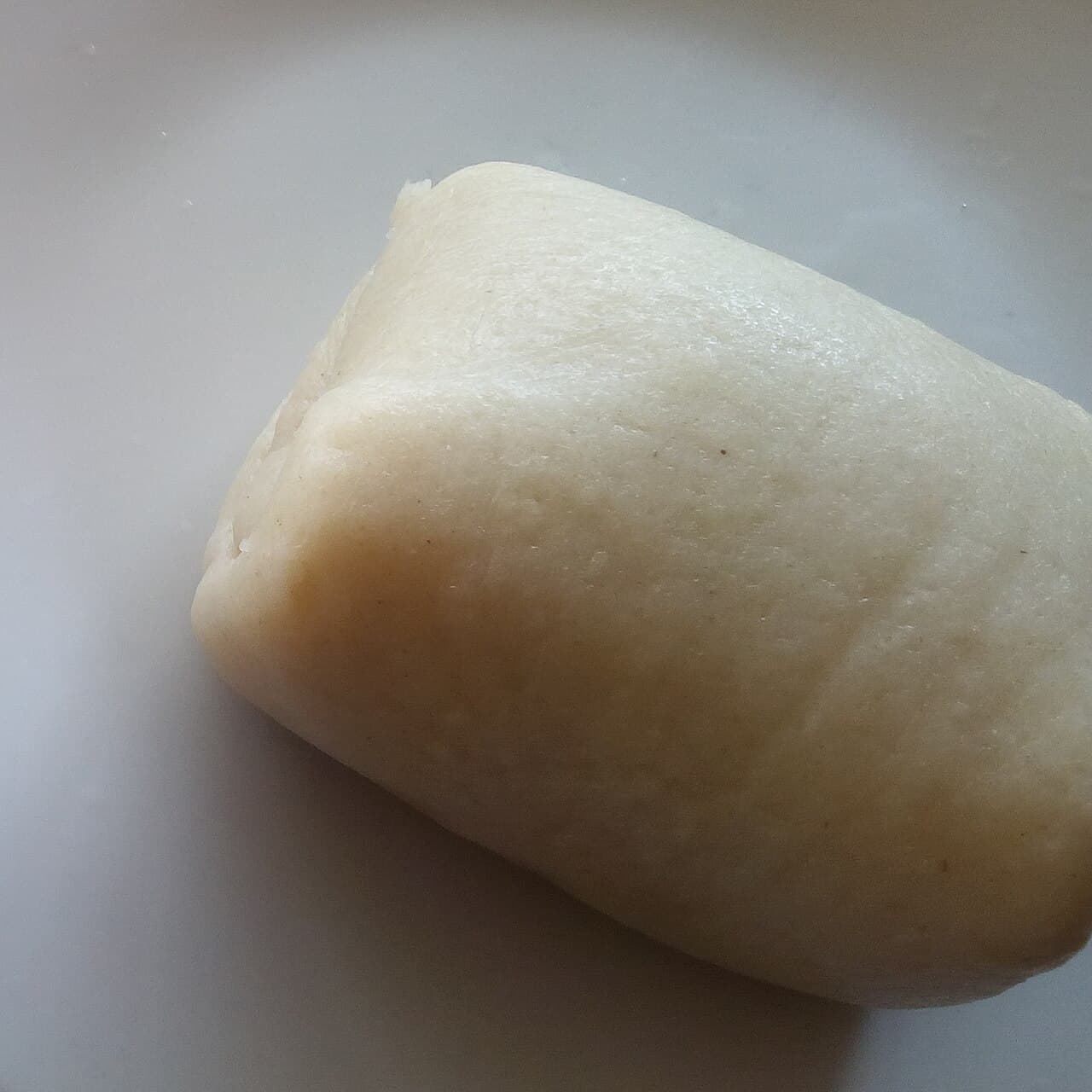
Maize grows widely across Togo, making it one of the most affordable and accessible foods in the country. To make akoumé, maize kernels are dried and ground into a fine pale flour. The flour is slowly stirred into boiling water - the cook must stir constantly and vigorously to stop lumps forming. As the mixture thickens, it becomes harder and harder to stir, which is why making akoumé is considered quite good exercise!
The finished akoumé is smooth, slightly elastic, and tastes mildly of corn with a gentle sweetness. It is nutritious on its own, and when paired with a protein-rich sauce - fish, beans, or groundnuts - it provides a balanced meal. In schools and markets across Togo, akoumé with sauce is the most popular and affordable lunch option.
Akoumé is closely related to other starchy porridges eaten across Africa, such as ugali in East Africa and sadza in Zimbabwe. Every region has its own version and its own favourite sauces to go with it. In Togo, families often have strong opinions about exactly how thick or soft their akoumé should be - it is a food that feels like home.