
Classroom lesson · Wildlife · 🇹🇬 Togo

Antelope

Graceful sprinters of the Togolese savannah

Photo · Wikimedia Commons

What is it?

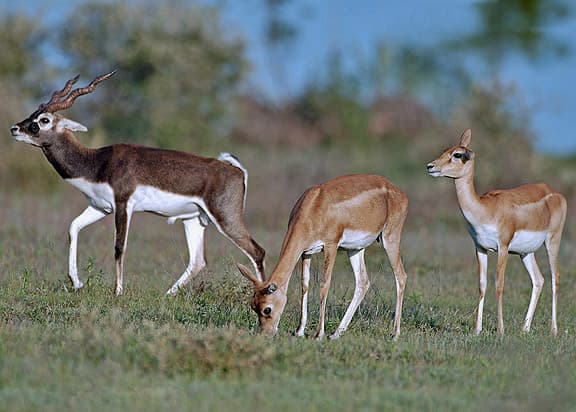
Several species of antelope live in Togo, roaming the grasslands and riverine forests of Fazao-Malfakassa National Park. Antelopes are hooved mammals related to cattle and goats, but they are built for speed — their long slender legs can carry them away from danger in a flash. The kob and the bushbuck are two of the most commonly spotted species in Togo.

Tell me more

Antelopes graze on grass and leaves, constantly on the alert for predators such as leopards and wild dogs. Their large eyes on the sides of their head give them almost 360-degree vision so they can spot danger while eating. When frightened, some species make a stiff-legged bouncing leap called 'pronking' — scientists think this shows predators 'I am fit and fast, don't bother chasing me'.

The kob is a reddish-brown antelope about the size of a large dog. Male kobs have curved horns that spiral elegantly outward. They gather in herds on open grassland near water. The bushbuck, on the other hand, is a secretive antelope of the forest edges — it has white spots and stripes that camouflage it in dappled forest light, and it tends to live alone rather than in herds.

Antelopes play an important role in the savannah ecosystem. By grazing, they keep the grass short and healthy, which in turn allows new plant growth. Their dung fertilises the soil, and when they die naturally they provide food for vultures, jackals, and other scavengers. Remove antelopes from a savannah and the whole landscape begins to change.

In the classroom

Walk your class through this in 15 minutes.

Talk together

Discussion prompts

  1. 01Antelopes have eyes on the sides of their heads. How is that different from where human eyes are, and what does each position allow you to see?
  2. 02The bushbuck hides alone in the forest; the kob stays in a herd in the open. Why might different antelopes have different survival strategies?
  3. 03Antelopes keep grass short by grazing, which helps the grassland stay healthy. Can you think of other ways animals help their habitat?
Try this

Classroom activity

Split the class in half. One half designs the 'perfect antelope' for open grassland (think: colour, eye position, speed, herd or alone). The other half designs the perfect antelope for forest edges. Each group draws and labels their antelope, then presents to the class explaining every design choice.