
Classroom lesson · Wildlife · 🇹🇬 Togo

Hippopotamus

The river giant that can hold its breath for five minutes

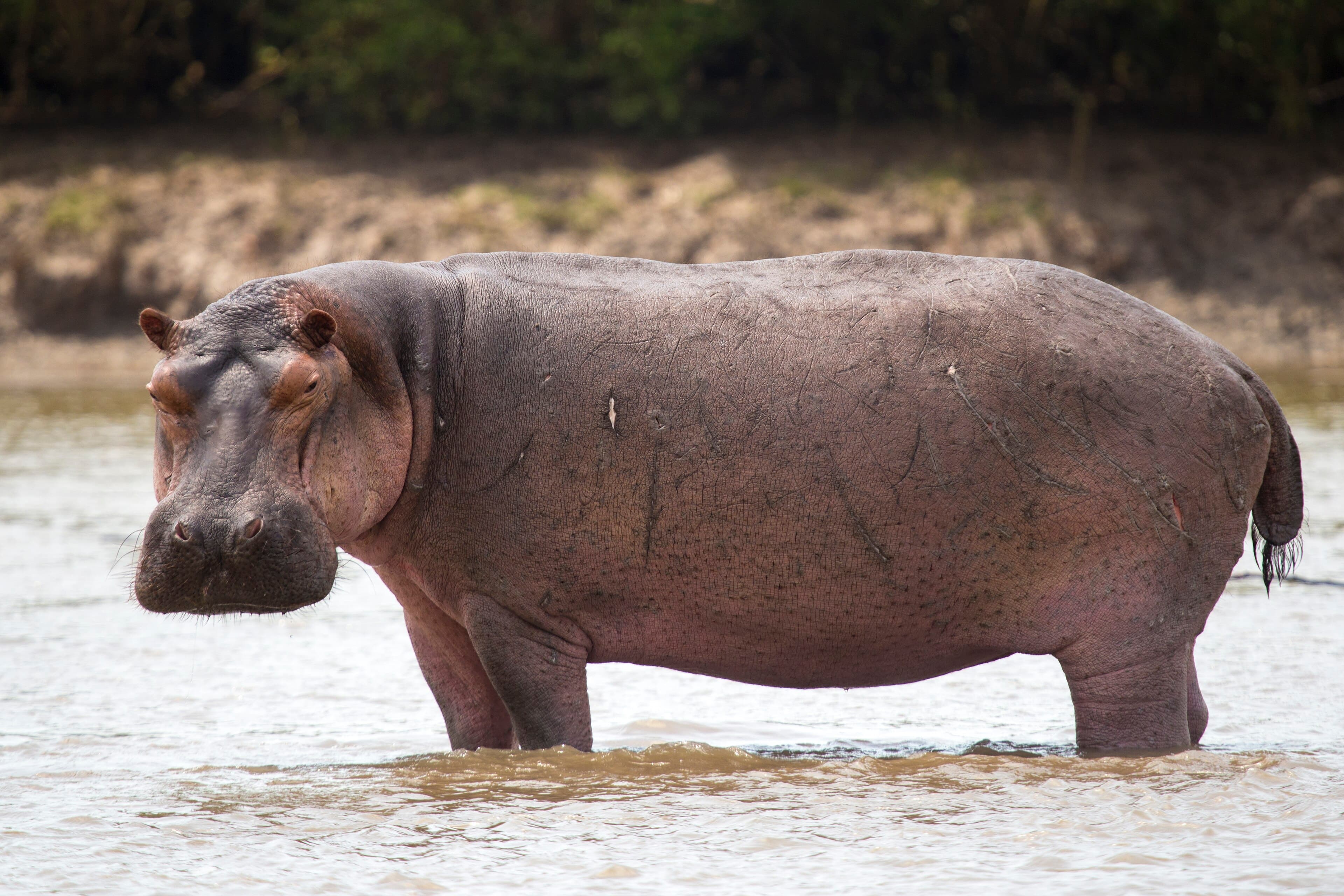
Photo · Wikimedia Commons

What is it?

The hippopotamus — 'hippo' for short — is one of Africa's largest animals, and it spends most of its day resting in rivers and lakes to keep cool. In Togo, hippos live in the rivers of Fazao-Malfakassa National Park. Despite looking slow and round, hippos are surprisingly fast and excellent swimmers.

Tell me more

A hippo's body is perfectly designed for water life. Its eyes, ears, and nostrils are all at the top of its head, so it can float with almost its whole body under the surface while still being able to see, hear, and breathe. It can also close its nostrils completely and hold its breath for up to five minutes when it dives to the river bottom.

Hippos have a special trick to protect their skin from the hot African sun: their skin produces a natural reddish oily liquid that works like a built-in suncream. This liquid also has antibacterial properties, helping small cuts heal quickly. Scientists only discovered this in the early 2000s, so hippos taught us something new about biology not very long ago.

Even though they spend the day in water, hippos are grazers — they eat grass. Each night they leave the river and walk several kilometres in the dark, grazing on riverside grassland, before returning to the water before sunrise. Their wide mouths and large flat teeth are designed for tearing up grass rather than catching prey.

In the classroom

Walk your class through this in 15 minutes.

Talk together

Discussion prompts

  1. 01The hippo's eyes, ears, and nostrils are all on top of its head. How does that shape help it survive in rivers?
  2. 02Hippos graze on grass at night and swim during the day. Why might splitting the day like that be a good survival strategy?
  3. 03Scientists discovered the hippo's 'suncream' trick only recently. What does that tell us about how much we still have to learn about animals?
Try this

Classroom activity

Design a fictional river creature of your own. It must be able to: breathe above water, see while mostly submerged, and protect its skin in the sun. Draw it, label at least four body parts, and write one sentence for each label explaining what that part does. Display your creatures around the classroom and vote on which is best adapted to river life.