
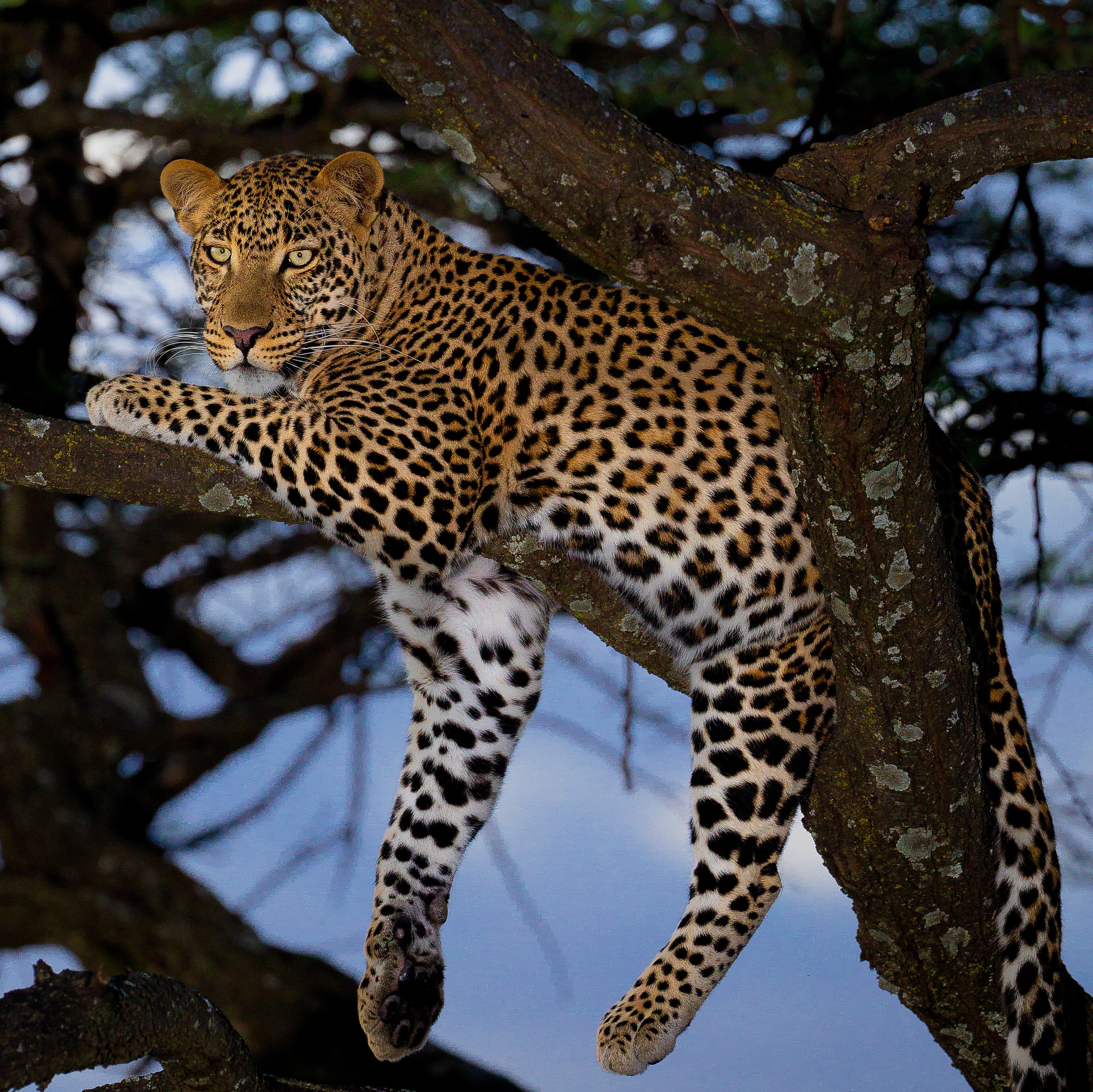
Leopards are climbers. While lions stay on the ground, a leopard often drags its food up into a tree and eats it there, safe from other animals. A leopard can carry something up to twice its own weight - up the trunk of a tree using only its powerful jaws and claws. Imagine carrying another person up a ladder using only your teeth.
Their spots are called rosettes because each cluster looks like a tiny rose. Every leopard has its own pattern - no two leopards in the world have the same spots. Wildlife guides in Zambia learn to recognise individual leopards by their spots, the same way we recognise people by their faces.
Leopards are mostly active at night and at dusk. By day they sleep in shady trees, draped over a branch with their legs dangling either side. Their golden colour blends perfectly with the dry grass and dappled shadows of the African bush - you can walk close to one and not see it.
Mothers raise their cubs alone. She hides them in a den - usually in a thick bush or rocky cleft - and brings food for two years until they learn to hunt for themselves. Leopard cubs spend hours each day play-fighting, chasing each other and pouncing on leaves, getting ready for the real thing.