
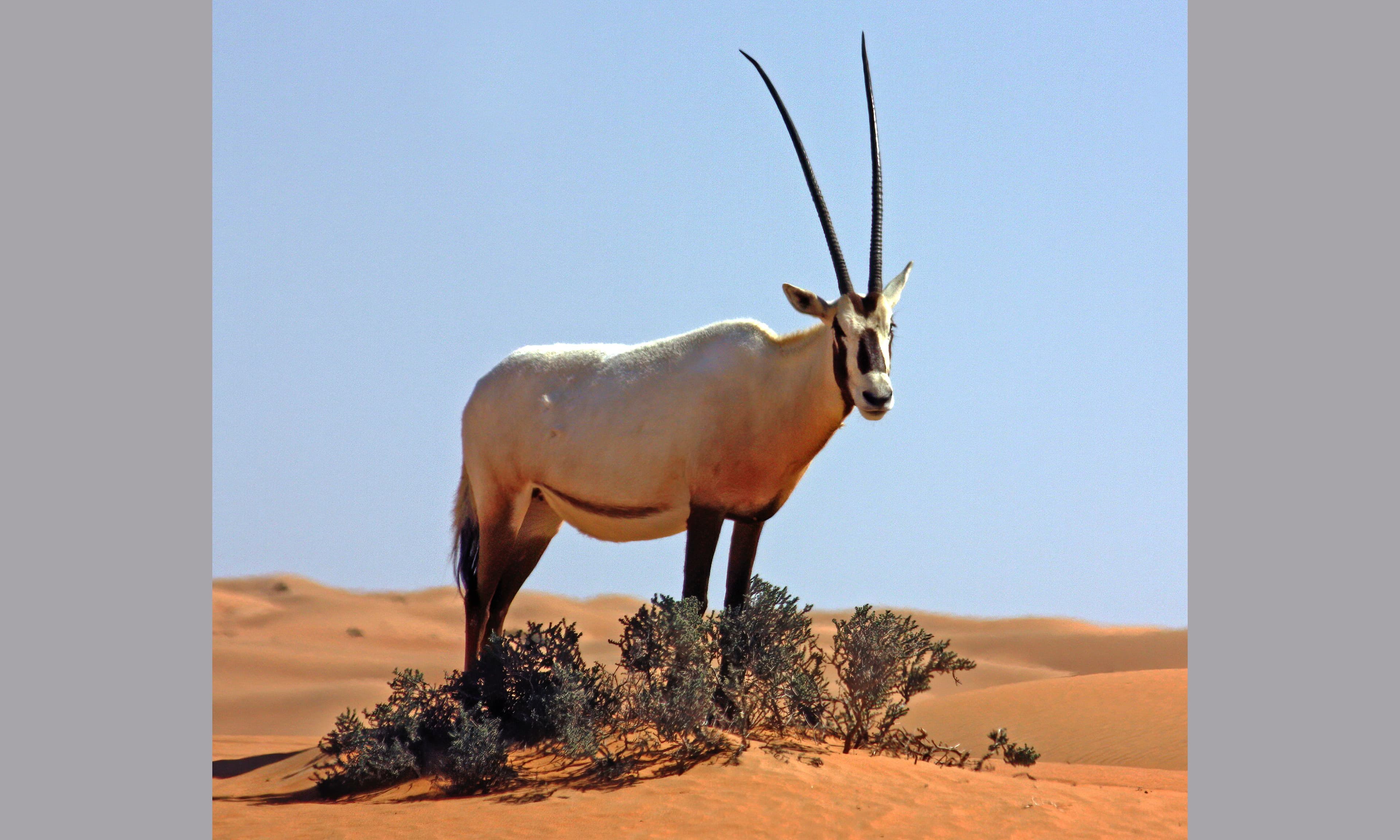
The Arabian oryx is perfectly built for desert life. Its white coat reflects sunlight, keeping it cool in temperatures that can reach 50°C. Its wide hooves act like snowshoes on soft sand, spreading its weight so it does not sink in. Its body temperature rises during the hottest part of the day rather than sweating, which saves precious water.
The oryx can detect rainfall from a very long distance - perhaps because of changes in air pressure or the smell of the wet ground - and will walk many kilometres towards the rain to find fresh grass and water. Herds follow these instincts across the desert in routes that their ancestors walked for thousands of years.
The oryx nearly disappeared in the 20th century because of hunting. By 1972, not a single Arabian oryx was left in the wild. A small group was kept safe in zoos and wildlife parks, and conservationists carefully bred the animals and eventually returned them to protected areas in several countries. It is now listed as 'vulnerable' rather than 'extinct in the wild' - a remarkable comeback.
The oryx has been important in Arab culture for thousands of years. It appears in ancient poetry, on coins and in artwork. Some historians think the oryx seen from the side - with one horn overlapping the other - may be behind the legend of the unicorn. In Kuwait, the oryx is a symbol of grace, resilience and the desert landscape.