
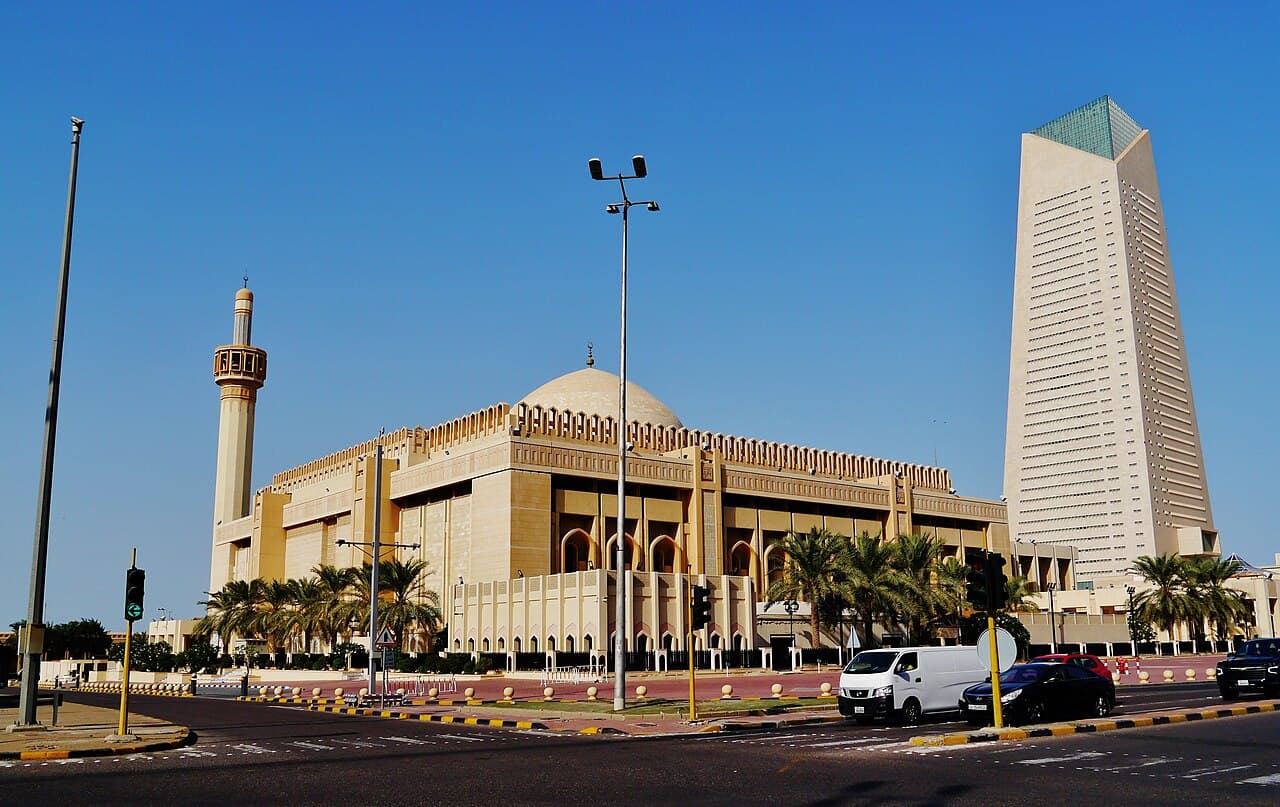
The main dome at the centre of the mosque is 43 metres wide and 26 metres tall from the inside - imagine a space big enough to fit two full-size football pitches side by side under one curved ceiling. The dome is decorated with geometric patterns in blue, gold and white that designers call arabesque, meaning shapes that repeat and interlock in endlessly clever ways.
The minaret, the tall tower beside the mosque, rises 74 metres into the sky. Minarets are designed so that the tower is slender and elegant, tapering gently toward the top. The minaret of the Grand Mosque has beautiful carved stonework running all the way up, and from the top there is a sweeping view across Kuwait City.
Inside, the floors are covered in marble imported from many different countries, and thousands of crystal lights hang from the ceilings. The craftspeople who built the mosque spent years fitting tiny tiles into enormous mosaic panels, each one a puzzle of colour and geometry. Looking up at the ceiling is like looking at a giant kaleidoscope.
The Grand Mosque runs guided tours so visitors from anywhere in the world can come in, learn about the architecture and see the craftsmanship close up. Architecture students sketch the patterns, and children from local schools visit on trips to learn how the building was designed and built.