
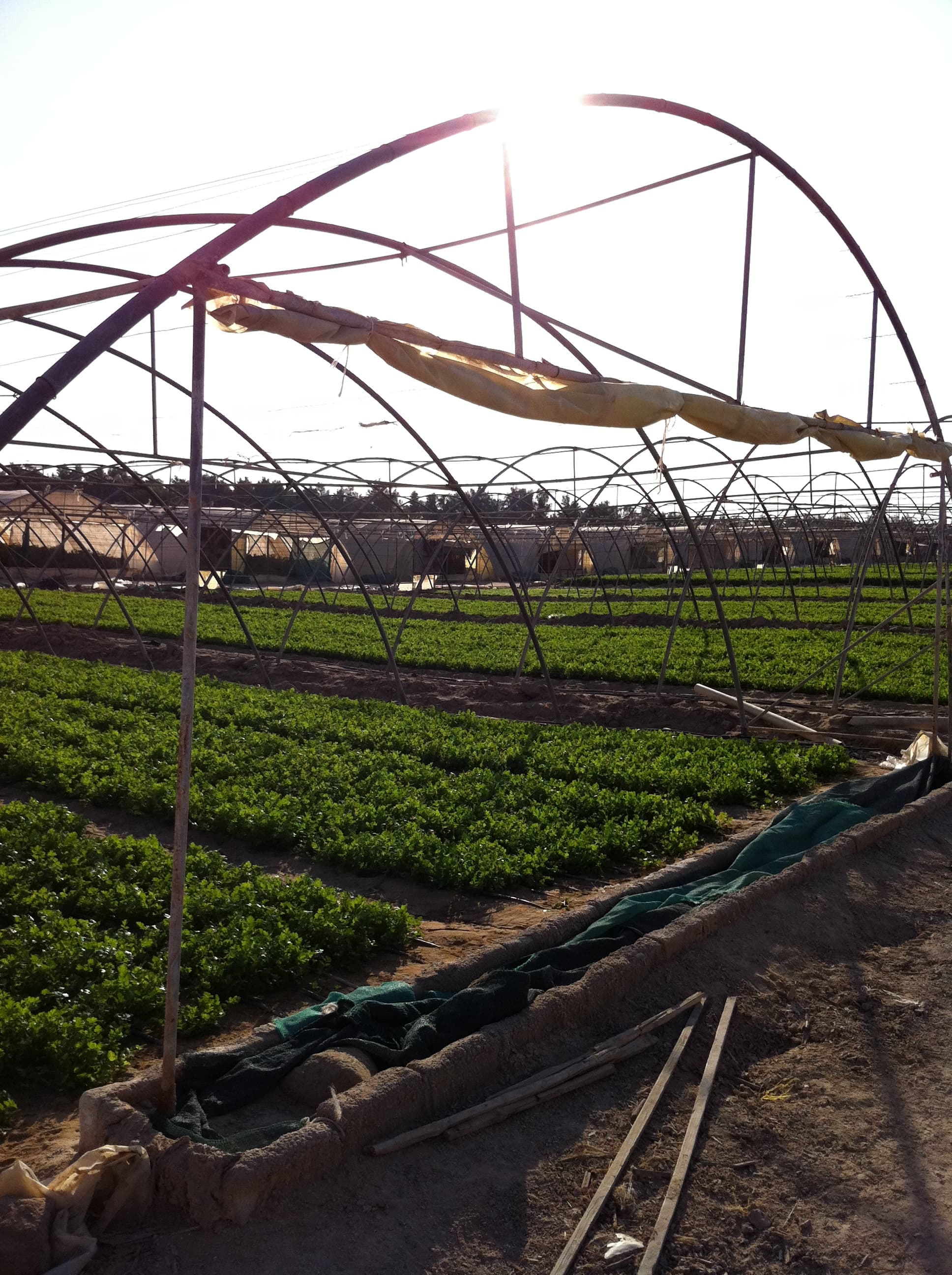
Kuwait receives very little rain - on average less than 120 millimetres a year, which is about the same amount that falls on the city of London in a single month. This means farmers at Wafra have to be incredibly clever about water. They use systems called drip irrigation, which delivers water directly to the roots of each plant through tiny pipes, wasting almost none of it.
The farms grow a wide variety of crops including tomatoes, cucumbers, courgettes, aubergines, dates, papayas and limes. The date palm is especially important - dates have been grown and eaten in this part of the world for thousands of years, and there are hundreds of different varieties, each with its own flavour, colour and texture.
Wafra's farmers also keep chickens, sheep and goats. The farms are a popular destination for school trips, where children who live in the city can see where food comes from, pat the animals and pick fruit straight from the trees. For many Kuwaiti children, a visit to Wafra is their first experience of a real working farm.
Scientists and engineers are always looking for new ways to grow more food in Kuwait's harsh climate. Some farms experiment with greenhouses that control the temperature, and others are testing whether certain crops can grow using treated sea water instead of fresh water. Wafra is both a traditional farming place and an exciting centre of food science.