
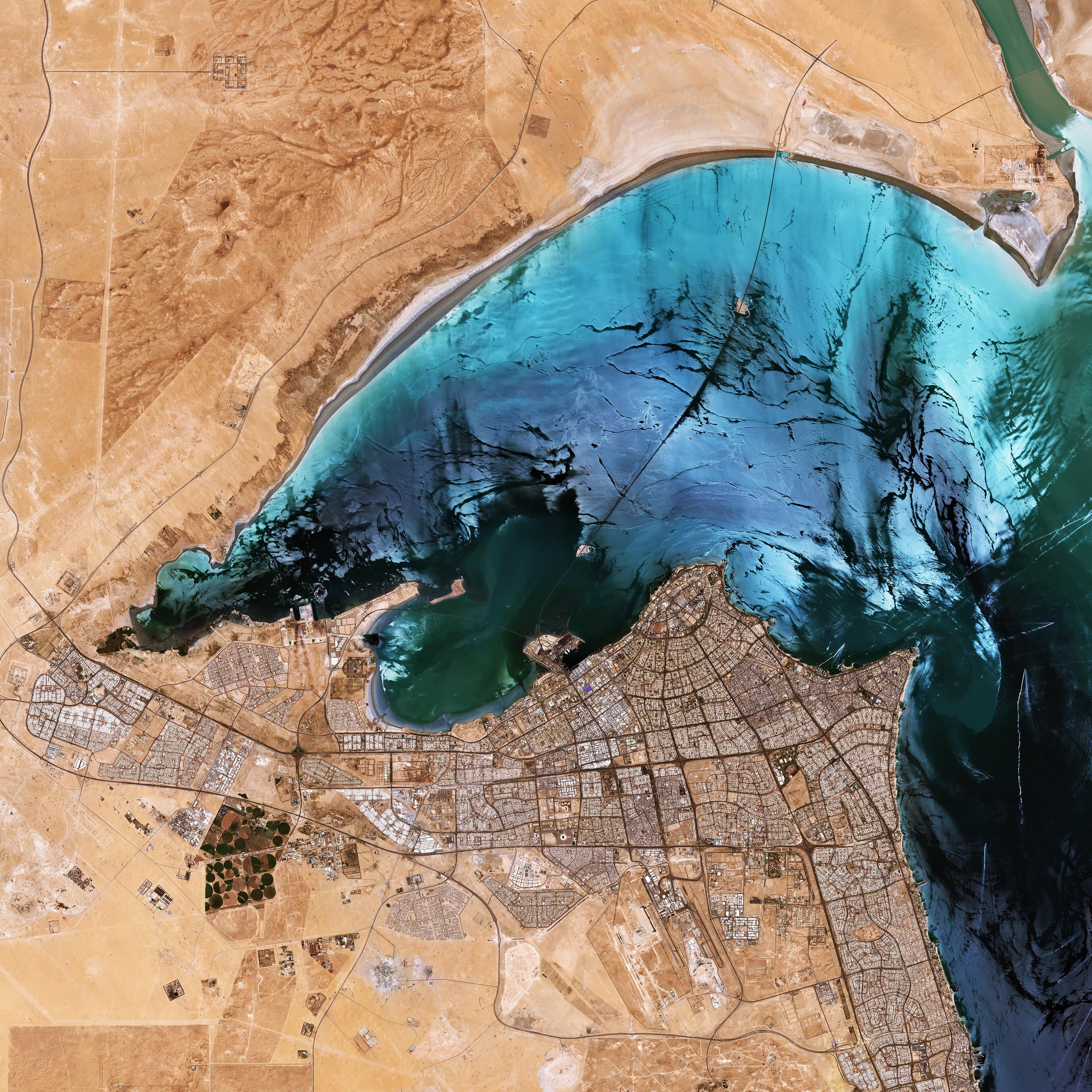
The bay stretches about 40 kilometres from tip to tip and its calm, protected waters have made it a natural harbour for centuries. Long before there were roads, the sea was the highway. Boats called dhows carried pearls, fish, dates and timber between Kuwait and ports as far away as India and East Africa. The whole economy of ancient Kuwait was built around this sheltered bay.
Along the modern seafront there is a long promenade called the Corniche, where families stroll in the evenings when the heat of the day fades. You can see fishermen casting lines from the rocks, children flying kites, and in the distance the three blue spheres of Kuwait Towers shining against the sky. The smell of the sea mixes with the smell of grilled fish from street stalls nearby.
The bay is home to a surprising variety of marine life. Shoals of fish glitter below the surface, and in the deeper parts of the Gulf just outside the bay, dolphins are spotted riding the bow waves of passing boats. Sea birds wheel overhead, and at certain times of year migratory flamingos gather in the shallower waters near the shore.
Pearl diving was one of the most important traditions of the bay for hundreds of years. Before machines, divers would hold their breath and plunge deep into the water to collect oysters from the seabed. The songs they sang on the boats have never been forgotten - they are still performed today as a living piece of Kuwaiti heritage.