
Classroom lesson ยท Wildlife ยท ๐Ÿ‡ฐ๐Ÿ‡ผ Kuwait

Dugong

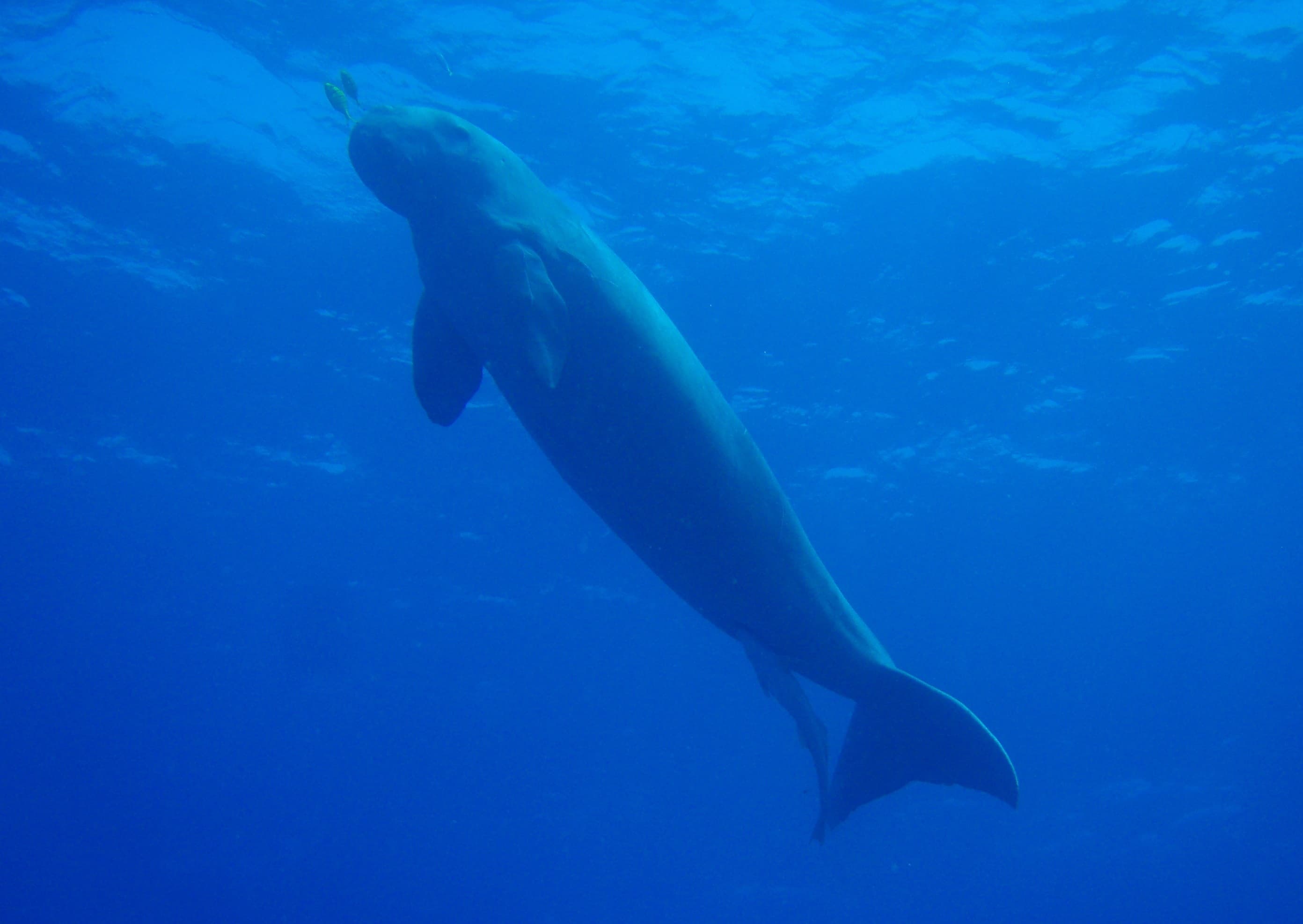
A gentle sea mammal that grazes on underwater meadows

Photo ยท Wikimedia Commons

What is it?

The dugong is a large, gentle sea mammal that lives in warm, shallow coastal waters. Kuwait's coastline and the wider Arabian Gulf is one of the most important dugong habitats in the world. With their round grey bodies, whiskery snouts and paddle-shaped tails, dugongs are sometimes called 'sea cows' because they spend their days quietly grazing on underwater seagrass meadows.

Tell me more

Dugongs are mammals, which means they breathe air โ€” they must come to the surface every few minutes to take a breath. They are closely related to elephants, which surprises most people. Scientists discovered the connection by studying their bones and DNA. Looking at a dugong's thick, wrinkled skin, a faint family resemblance to an elephant is actually quite easy to imagine.

A dugong can eat up to 40 kilograms of seagrass in a single day. They root around in the seabed with their flexible, downturned snouts, leaving behind distinctive bare trails through the grass called 'feeding trails'. These trails are so distinctive that scientists can spot them from aeroplanes and use them to count how many dugongs are living in an area.

Kuwait and Bahrain together host one of the largest dugong populations outside Australia. The shallow, warm waters of the Gulf and the rich seagrass beds make it perfect habitat. Dugongs are shy and gentle; they move slowly through the water, often in pairs or small family groups. They can live for 70 years or more, growing old in the same shallow seas.

Dugongs are vulnerable to extinction because they reproduce very slowly โ€” a female has only one calf every three to seven years. This means that if many dugongs are harmed, the population takes a very long time to recover. Kuwait has established marine protected areas where boats travel slowly and dugongs can feed without disturbance.

In the classroom

Walk your class through this in 15 minutes.

Talk together

Discussion prompts

  1. 01Dugongs are related to elephants โ€” animals that look totally different and live in completely different places. What does this tell us about how life on Earth has changed over millions of years?
  2. 02Scientists track dugongs from aeroplanes by looking for their feeding trails. What other clever methods might scientists use to count wild animals without disturbing them?
  3. 03If dugongs reproduce very slowly, why does that make protecting them especially urgent?
Try this

Classroom activity

Write and illustrate a 'Day in the Life of a Dugong' story from the dugong's point of view. Include: waking up underwater, coming to the surface to breathe, grazing on seagrass, interacting with a family member, and sensing a boat overhead. Use factual details from the lesson to make the story realistic.