
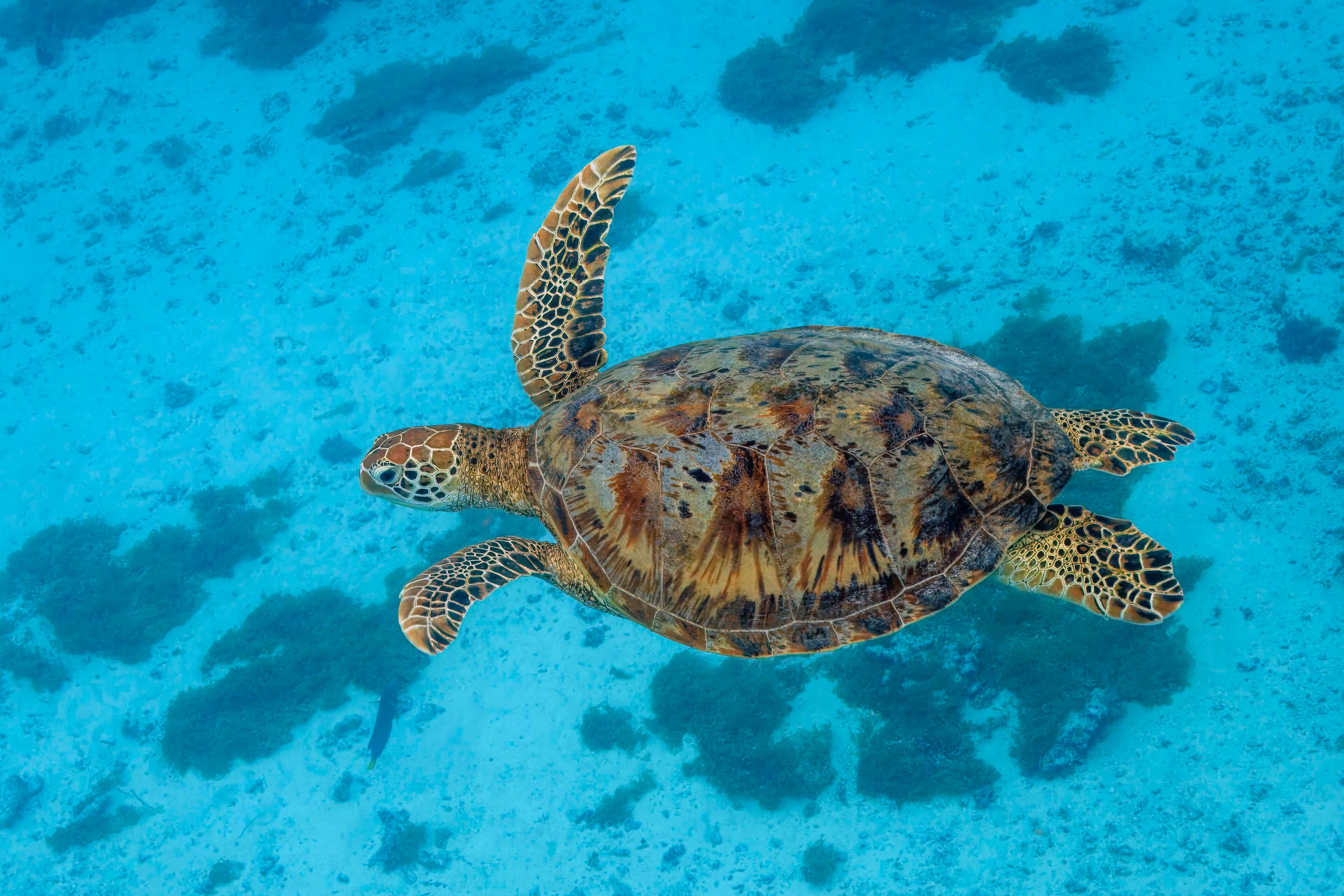
A green sea turtle's shell can grow up to 1.5 metres long - about the length of a bed. Despite being so large, turtles are surprisingly graceful underwater, gliding effortlessly through the water. They are not fast sprinters but are excellent long-distance travellers, swimming thousands of kilometres between feeding grounds and nesting beaches.
Green sea turtles eat mostly seagrass and algae. Their diet keeps them extremely important for ocean health - by grazing on seagrass, they keep the meadows short and healthy, which in turn provides food and shelter for dozens of other species of fish and shellfish. Remove the turtles and the whole seagrass ecosystem starts to collapse.
Female turtles return to the very beach where they were born to lay their own eggs - even if that beach is thousands of kilometres away. Scientists are not entirely sure how they navigate so precisely, but they appear to use the Earth's magnetic field as a compass. Eggs incubate in warm sand for about two months before tiny hatchlings dig their way up to the surface.
Green sea turtles are an endangered species and are protected in Kuwait and most other countries. Threats include getting caught in fishing nets, plastic pollution in the ocean and the loss of nesting beaches. Marine conservation groups in Kuwait and across the Gulf work to monitor nests, rescue injured turtles and educate people about protecting these ancient animals.