
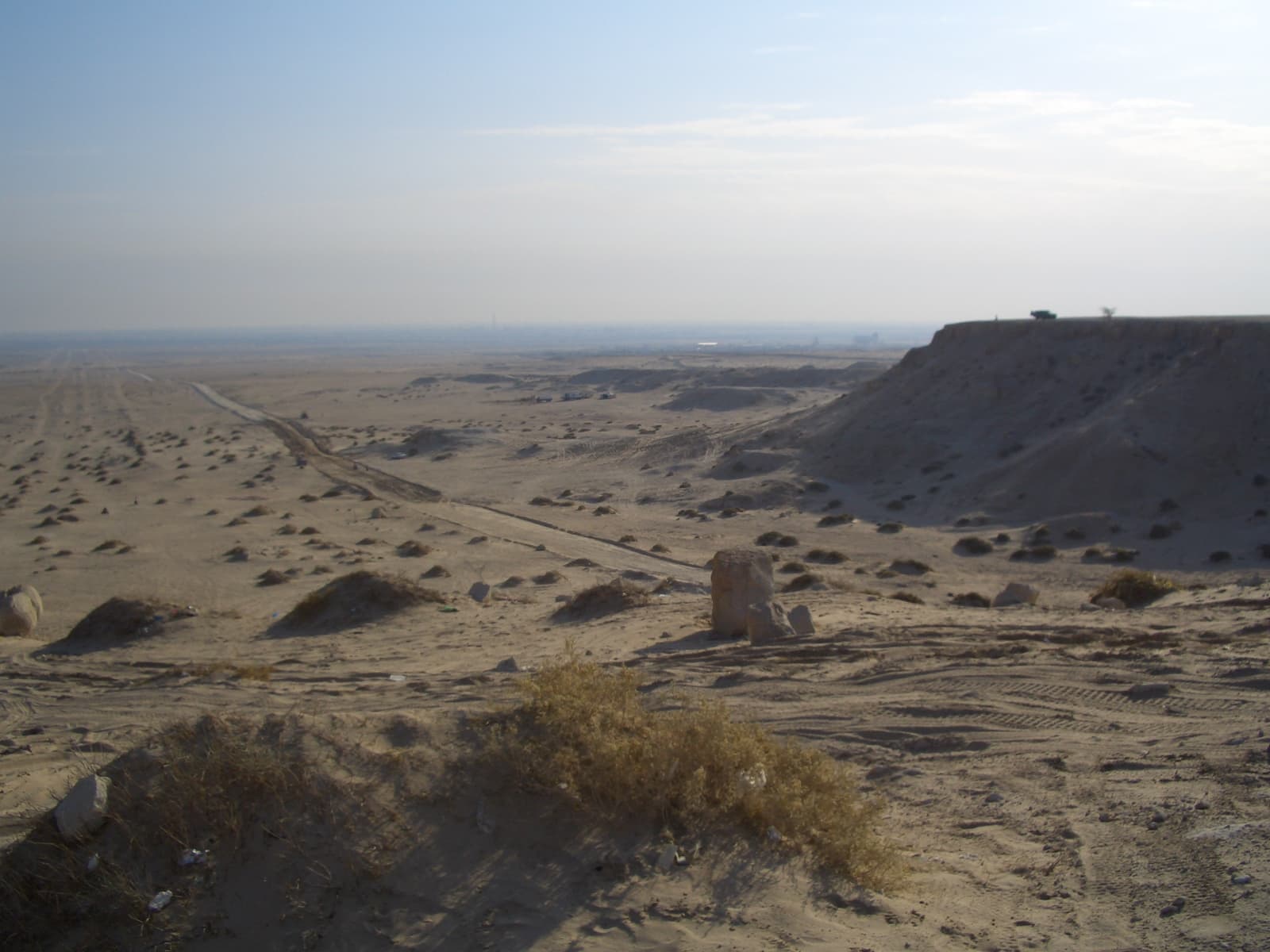
Kuwait is mostly flat - so Mutla Ridge stands out dramatically. The ridge was formed millions of years ago when layers of rock and sediment were slowly pushed up by movements beneath the Earth. The pale limestone and gravel surface looks bare and dramatic, but if you look closely at the cracks and shadows you can find lizards, insects and desert plants clinging on.
The ridge is an important spot for birdwatchers. Because it sits along one of the main migration routes between Europe, Asia and Africa, thousands of birds pass over Kuwait every spring and autumn. Hawks, eagles, harriers and falcons ride the warm air currents (called thermals) that rise from the heated rock. On a good migration day, the sky above the ridge can be filled with hundreds of birds wheeling overhead.
In the early morning, before the heat becomes intense, the ridge is a popular walking spot. The light at sunrise turns the pale stone a warm gold and orange colour. The silence is extraordinary - the only sounds are wind, distant birds, and the crunch of gravel underfoot. Many Kuwaiti families drive out to the ridge for picnics in the cooler winter months.
From the top of the ridge on a very clear day you can see both the desert stretching away to the horizon and, turning around, the blue glimmer of Kuwait Bay far below. Geologists come here to study the rock layers because each band of colour in the cliff face is a different chapter in the very long story of how this land was formed.